
Why DIY cleaning hacks do more harm than good on upholstery
- June 5th, 2026
-
 Fabrics Education
-
 All Spaces
Summary:
Home remedies are damaging sofa fabrics. From vinegar and baking soda to bleach, DIY cleaning solutions often do more harm than good. They can damage your upholstery, harm your health, and pollute the environment, all without you realising it. Here's what they're actually doing to your upholstery, and why FibreGuard fabrics are designed so you'll never need them.
The Problem with DIY Cleaning Hacks
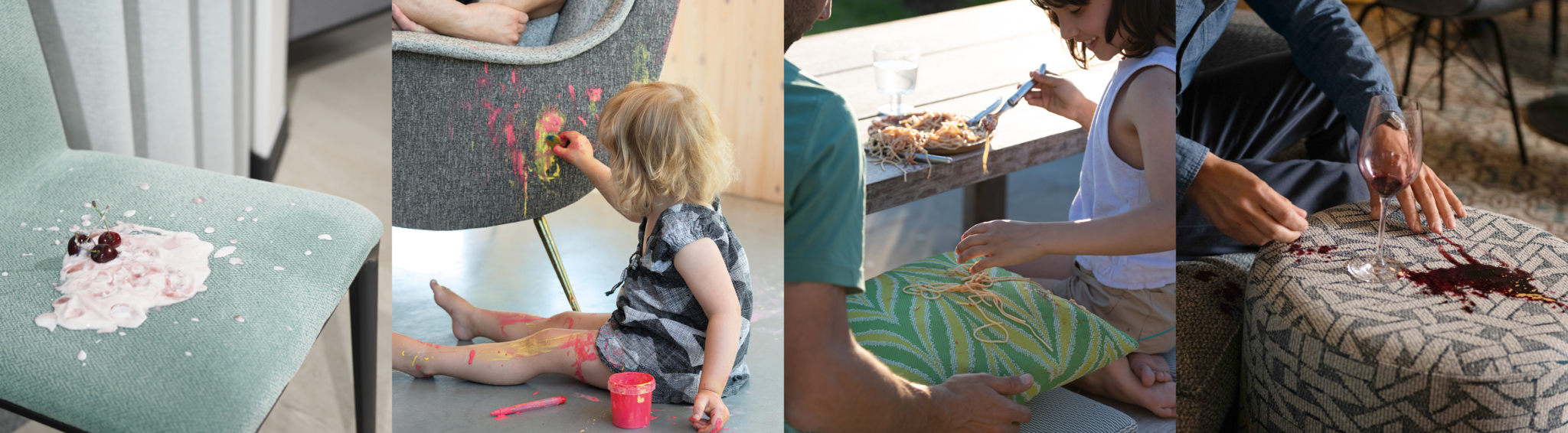
Start with a household with boisterous kids and enthusiastic pets. Add in the general stuff of everyday life: coffee, crayons, lipstick, fruit juice.
What do you get?
Normal household accidents just waiting to happen. Suddenly your sofa fabric has a deep stain seeping in on it: now what?
With standard fabrics being so hard to clean, people naturally then begin searching for DIY hacks. However, most home remedies are more hassle than help.
Here's what those disinfecting and cleaning tips and tricks actually do to your upholstery.

Why is Traditional Upholstery So Hard to Clean?
Traditional upholstery creates cleaning headaches for a whole variety of reasons. Watermarks, moisture seeping, mould and foul smells are the stuff of nightmares. So, when faced with a spill, the urge to reach for a natural, chemical-free, household solution is understandable.
Why is there no one-size-fits-all solution to cleaning sofa fabrics?
The combination of varied materials, deep absorption, and diverse stain chemistry makes a single cleaning solution impossible for traditional upholstery.
Fabric composition
Natural fibres like cotton and linen react differently to stains than synthetics like polyester. Natural fibres and blends are traditionally harder to clean because natural fibres absorb and hold water so deeply.
Different kinds of stains
Traditionally, different stains (oil, food, ink) require different treatments. Water-based stains like coffee have completely different chemistry than oil-based stains like grease or makeup.
Want to see FibeGuard in action? Visit our How to Clean page to see FibreGuard fabrics handle real household stains in our videos. >>>
What can DIY cleaning tips do to your sofa?
The main culprits causing permanent damage to both fibres and the environment
- Vinegar: Acidic ingredients like vinegar (acetic acid) weaken fabric fibres. Green Matters points out that not all vinegar is environmentally friendly either.
- Baking soda: Abrasive powders like baking soda can wear down upholstery fibres, especially when scrubbed aggressively.
- Mixing vinegar and baking soda: Uncontrolled DIY mixtures can leave residues, cause discolouration, or even set stains permanently.
- Many expert cleaning guides compare baking soda + vinegar mixtures against commercial detergents and found wildly varying effectiveness.
- Bleach cleaning: Bleach is the worst offender. It damages fabric, health, and the environment all at once: and the damage on all three fronts is significantly more severe than its household alternatives.
Cleaning chemicals can also harm human health
The Cleveland Clinic warns that home remedy cleaners can cause skin and eye irritation. They also release Volatile Organic Compounds (VOCs), according to the American Lung Association. These compounds evaporate into the air, affecting the air your family breathes daily, potentially causing long-term respiratory issues and headaches.
Cleaning chemicals hurt the environment we live in
The effect of millions of households using these products daily creates significant environmental stress. It’s one of the reasons why there's growing interest in eco-friendly products. When bleach enters waterways, it's proven to be highly toxic to aquatic life, even in small concentrations. It can kill fish, plants, and microorganisms that are essential to healthy ecosystems. A toxicological overview on bleach done by the UK government classes it as a "hazardous substance" and "extremely toxic to aquatic life with long-lasting effects".
Plus, many modern chemicals are "persistent organic pollutants" that don't biodegrade naturally, remaining in soil and water for years or even decades.
FibreGuard fabrics are PFAS-free and certified to prove it.
Interested in keeping the thread going on this topic? Head over to this other article on PFAS-free upholstery, and get an even bigger picture. >>>
Our Simple Four-Step Cleaning Process
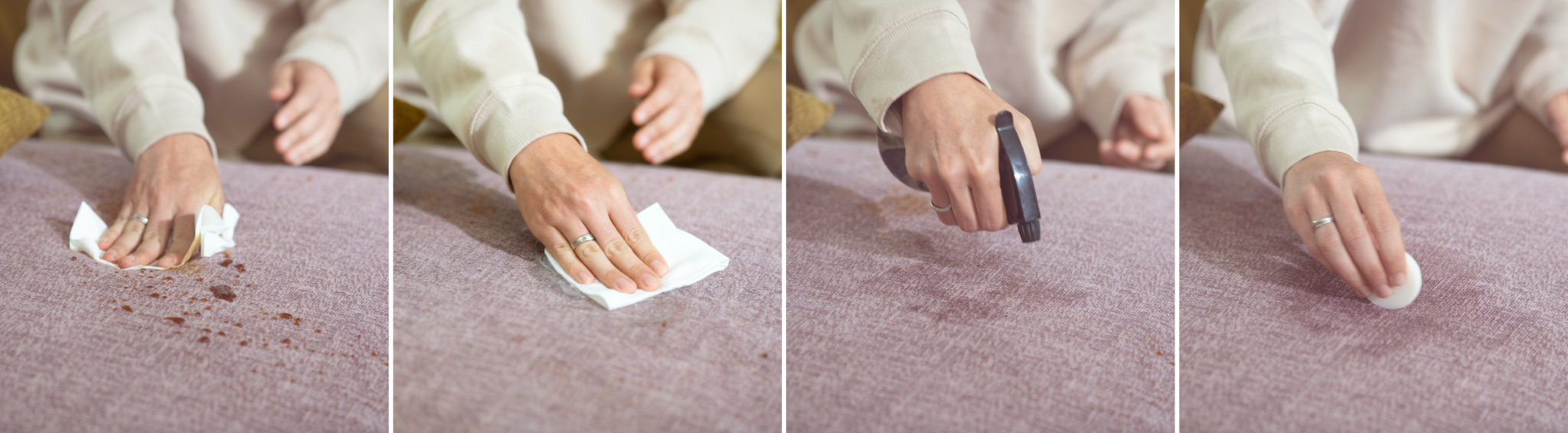
Our four-step cleaning process. works on all common accidental household stains, including coffee, red wine, ketchup, mud, ink, and pet stains:
- Remove Residue
- Apply Water & Blot
- Rub in Circles
- Air Dry
For cleaning videos and stain-specific advice, visit our cleaning performance fabrics page. >>>
Conclusion: Stop the Hacks, Start the Simple Clean
FibreGuard eliminates the need for complicated, damaging home remedy cleaning tricks by providing built-in, permanent, and certified protection.
You don't have to worry about whether vinegar will strip your colour or if a baking soda paste will set a stain permanently. FibreGuard fabrics are independently tested by Labotex across 100+ cleaning tests, none of which use anything beyond water or mild soap. Our fabric ranges don't rely on the harsh DIY chemical solutions like vinegar, baking soda, or bleach. They’re also free of harmful chemicals like PFAs and VOCs.
Key Takeaways:
- Acidic liquids like vinegar and bleach can be dangerous for your fabrics and the environment around us. Abrasive substances like baking soda damage or weaken fabric fibres.
- FibreGuard Fabrics provide a superior alternative to messy DIY cleaning methods. Cleaning is straightforward, as most everyday stains can be removed with just water and a cloth.
- FibreGuard's stain resistance is engineered into the fibres, ensuring durability and softness.
- Confidence in cleaning: our cleaning method is risk-free, protecting the fabric from the fading, damage, and odours that harsh, trial-and-error DIY cleaners can cause.

FAQ: vinegar, baking soda, and fabric cleaning
Does vinegar damage fabrics? How?
- Direct, concentrated, or repeated use of acidic cleaners like vinegar can damage textile fibres, particularly protein-based ones like wool, silk, and cashmere, according to Biology Insights.
- The acetic acid doesn't just sit on the surface; it works into the fibre structure and weakens it over time.
- The damage is often invisible until it's already done. Mother Nature's Cleaning notes that vinegar's acidity can be particularly bad for certain upholstery types. They recommend always checking manufacturer instructions before applying any vinegar-based solution.
Doesn't vinegar 'set' the colour in fabrics?
The idea that vinegar sets colour in fabric is a myth for modern, commercially dyed textiles — and according to a University of Nebraska study, its acetic acid can actually cause the opposite problem.
Removing Colour
- The acetic acid in vinegar can help remove certain stains, such as red ink and dye stains, fruit stains, and old perspiration stains.
- However, because it works well to remove these colours and stains, it can also fade or change the fabric's colour too.
- This is especially true if it is applied directly and left to soak.
Removing Residue
Vinegar does help colours look brighter, but this is usually because it acts as a rinse and removes the dulling residue and waxy buildup left by alkaline detergents and fabric softeners. The brightening effect is not because it "sets" the colour itself.
Why is bleach so dangerous for our health and fabric fibres?
Bleach (sodium hypochlorite) is a far more aggressive chemical than acetic acid (vinegar) or baking soda. While vinegar weakens fibers gradually and baking soda wears them down physically, bleach attacks fabrics chemically, physically, and instantly.
1. Fabric Damage (Severe & Irreversible)
- Permanent Colour Loss: Bleach breaks down the chromophores (colour-reflecting parts) in dye molecules. Once this happens, the colour loss is permanent, and there's no way to fix it.
- Structural Ruin: It degrades fabric fibres simultaneously and much faster than vinegar or baking soda.
2. The Acute Health Risks of Bleach Cleaning
The Centers for Disease Control and Prevention warn that bleach is highly corrosive, toxic, and unstable. It damages surfaces, degrades indoor air quality, and can create life-threatening gases when accidentally mixed with common household cleaners like ammonia or vinegar. Its effects on the body include severe irritation of the eyes, skin, and respiratory tract, as well as potential tissue damage or burns if swallowed or exposed in high concentrations.
3. Environmental Impact
If you wash it down the drain, bleach reacts with the wastewater to form hazardous organic compounds, including chloroform. It persists in the environment, polluting waterways, disrupting aquatic ecosystems, and ultimately finding its way into the food chain.
Ready to specify a fabric that cleans with just water? Browse the full FibreGuard collection digitally throughthe Twinbru Platform.
 Design Inspiration
 Hospitality