
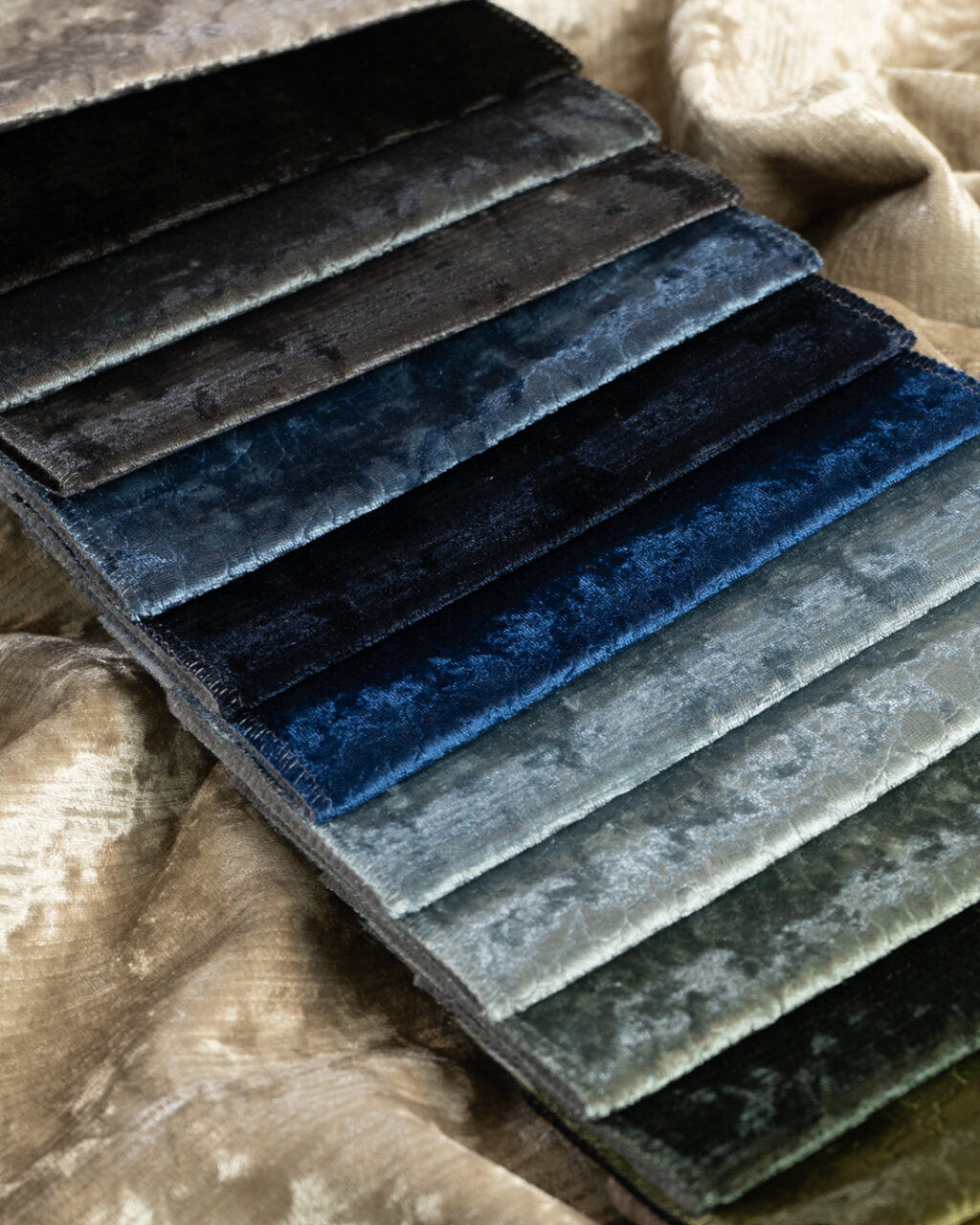
Is velvet upholstery durable?
- June 11th, 2026
-
 Fabrics Education
-
 All Spaces
Is velvet upholstery durable?
Originally published in December 2023; updated in June 2026 with fresh data.
Velvet upholstery gives furniture the instant wow factor, but this deliciously soft and tactile material might not be the obvious choice for a family sofa. It’s actually more practical than you might think! In this blog post, we look at some FAQs we’re getting around velvet: why choose it?
Is it durable? How do you clean it?
Modern velvet upholstery fabrics: a dream to clean
OK, so we’ve established that velvet sofas are super luxe and oh-so-desirable. But how do they stand up to the wear and tear of daily life? It has a reputation for being high maintenance but in fact, nowadays a high-quality velvet sofa can be surprisingly resilient.
Let’s break it down from fibre to handfeel. Cleaning modern performance velvet is shockingly easy compared to the old-school silk stuff, but because it has a raised pile, there are a few golden rules you have to follow to keep it looking plush.

In How to choose durable upholstery fabric (a practical guide), we explain what makes upholstery durable and even more insights to choose the perfect material for your furniture and your specific needs. >>
1. Synthetic Fibres (The Content)
The single biggest shift in modern velvet is the use of high-tech synthetic fibres.
- Tensile Strength: Polyester fibres are incredibly tough and don't break down easily under friction. Learn more about synthetic fibres in our Upholstery Fabric 101.
- Resilience: Unlike natural silk or cotton, synthetic fibres have an inherent "shape memory." If you sit on them, the pile (the raised surface threads) tends to bounce right back up instead of staying permanently flattened or "bruised."
2. The Dense Double-Weave (The Structure)
As shown in the weaving diagram above, velvet isn't flat. It’s woven on a special loom as a double cloth: essentially two layers of fabric joined together by a vertical warp yarn. A precise mechanical knife then slices down the middle, creating two separate pieces of fabric with that iconic raised pile.
Modern looms pack these vertical threads much closer together than older manufacturing methods allowed. Because the pile is incredibly dense, there's less room for the threads to shift, snag, or pull out when scraped by a pet's claws or rubbed by denim jeans.
The Pet Owner's Secret: Because velvet is a pile fabric made of cut loops, it has fewer exposed "loops" for cats or dogs to catch their claws in. This makes modern synthetic velvet one of the most pet-friendly upholstery fabrics on the market.
3. Added performance extras
There are a wide range of performance characteristics when it comes to all upholstery, not just velvet. We can't speak for any other upholstery brands, but our easy-clean fabrics are engineered with innovative stain-resistant technology that makes them ideal for environments where spills, dirt and wear-and-tear are common.

What is the best way to clean and remove stains from modern synthetic performance velvet furniture?
There are simple steps to keeping your velvet upholstery pristine. With FibreGuard fabrics, there are 4 simple cleaning steps. We cannot speak for any other upholstery brands; however, general solid cleaning advice includes:
- Before applying anything to your furniture, look under the cushions for the cleaning code tag.
- Use your vacuum cleaner to thoroughly clean up the area. Never skip this. If you apply liquid to a dusty couch, you will turn that dust into mud, forcing it deep between the pile threads and leaving a permanent dingy ring. Yuck.
- If you're using any cleaning cloths like microfibre cloths, do not rub: rubbing pushes the stain deeper into the fabric backing and distorts the pile. This is also true of our own performance velvets. Use a very gentle circular motion instead.
- Use soap if necessary. With FibreGuard any plain bar of normal household soap is enough. Other upholstery brands may vary.
- Take a dry towel and press it hard against the wet spot to lift out as much moisture as possible.
Dealing with Stubborn or Dried Stains
Remember that stains are always easier to remove when you tackle them immediately. On traditional velvet, if a stain like coffee, red wine, or ink has managed to dry into the fabric, standard cleaning instructions might not apply.
Our performance velvet is different. Spilled some fruit juice on your scramble out the door this morning? Timing doesn’t matter as much as you’d think. It will still be cleanable when you get home tonight. We've tested this extensively: coffee, red wine, ketchup, jam, chocolate. They all respond to the same simple process, hours later.
The Secret Step: Resetting the Pile
When velvet gets wet, the vertical fibres clump together and dry flat. When you look at the couch later, it might look like the stain is still there, but you are actually just seeing a shadow caused by crushed fabric.
How to fix it: Once the fabric is 100% dry, take a soft-bristled clothes brush or a clean, dry suede brush and gently brush the area against the grain, then with the grain. This detangles the polyester fibres and lifts them back up, completely erasing the "stain shadow" and restoring the soft texture.
"We needed a specific shade that would bring warmth to the space while standing up to daily life with kids. After an extensive search, we found the perfect match in FibreGuard's velvet collection. The fabric's ability to resist stains from juice spills and crayon marks has been a game-changer for our clients." – NEW-ROOM DESIGN Custom Interiors < case study >
The best colours for velvet sofas (sales data)
Historically, people only bought dark velvet to hide dirt. With modern, easy-clean barriers woven into the fibres, light-toned velvets have genuinely become high-volume sellers for all spaces, including family homes. Our sales data breaks it down:
Natural tones (cream, beige, sand) lead at approximately 30% of total sales
Silver stands at approximately 20%
Ecru comes in at approximately 15%
Browns as well as more vivid colours make up the balance of the rest of our sales.
Key Takeaways:
- Velvet upholstery is durable thanks to modern textile engineering
- Synthetic fibres make modern velvets much more resilient
- Performance features like fibre-level stain resistance make modern velvets shockingly easy to maintain
- On traditional velvet, if a stain like coffee, red wine, or ink has managed to dry into the fabric, standard cleaning instructions might not apply.
- Resetting the pile once cleaned is key to restoring the soft texture.
- Light tone velvets are really popular, according to our own sales data.
Ready to specify a fabric that cleans with just water? Browse the full FibreGuard collection digitally through the Twinbru Platform.
 Design Inspiration
 Hospitality