
Performance fabrics
Meet the overachievers of the textile world
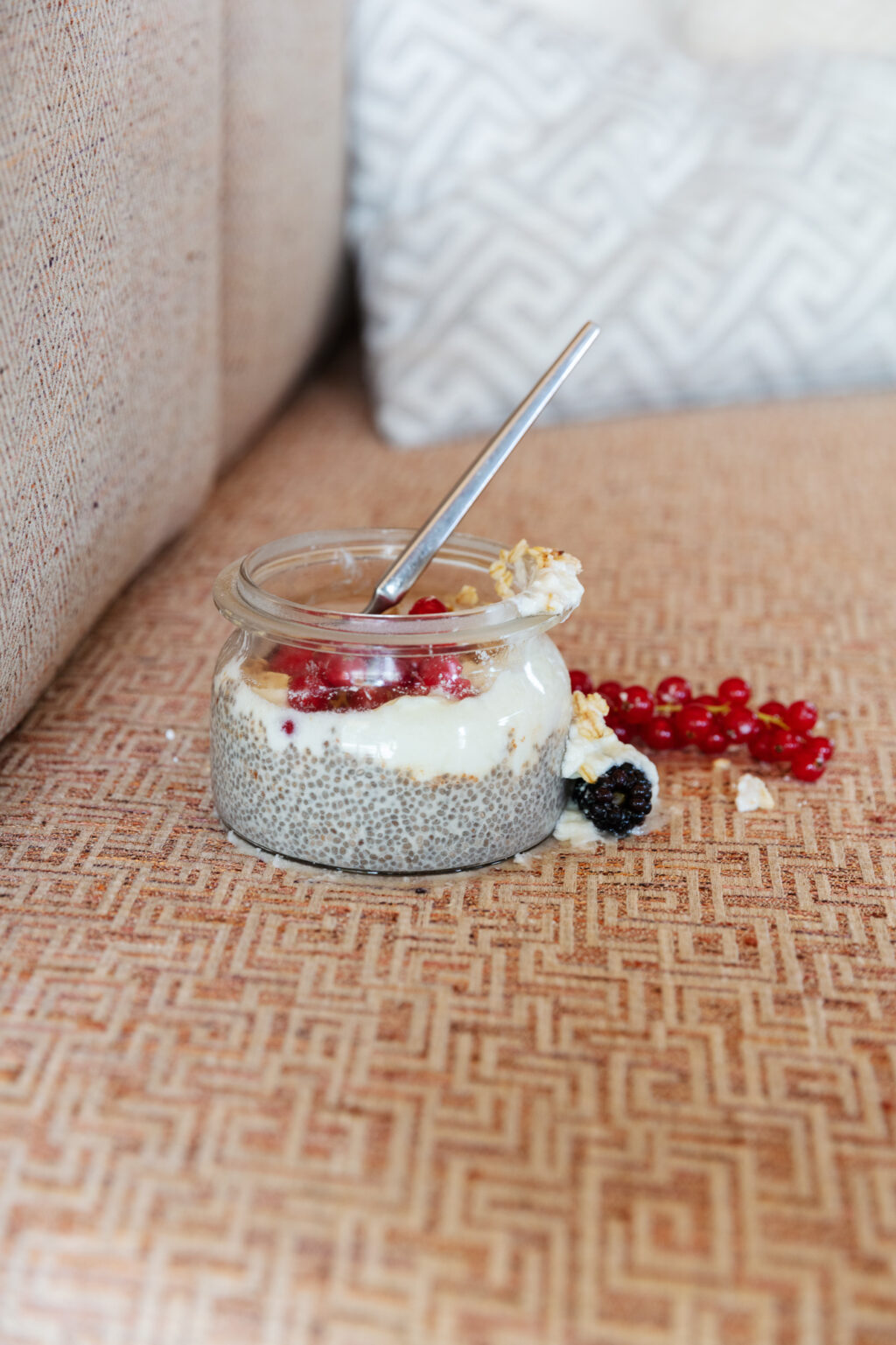
Performance fabrics are engineered to handle the chaos of real life. Think sticky fingers, muddy paws, frequent cleanings, and sunny patios: all without ever dropping the ball on style.
While "high-performance" can mean many things, it always means one thing for you: total peace of mind.
What makes performance upholstery fabrics different to standard upholstery fabrics?
Fabric Composition and Built-In Protective Technologies
What a fabric is made of directly dictates how it handles spills, sunlight, and pets.
Standard 'Normal' Upholstery:
- Common Materials: Natural fibers (cotton, wool, linen) and basic synthetic blends (standard polyester, nylon).
- Best For: Chosen primarily for its immediate soft texture, breathability, and aesthetic variety.
- Vulnerabilities: Lacks inherent resistance to liquid spills, deeply embedded pet hair, or color fading from direct sunlight.
Performance Upholstery:
- Common Materials: Advanced, engineered synthetic fibers like solution-dyed polyester and polyolefin.
- Best For: Homes with kids, pets, or high sun exposure. These fabrics are treated at the fibre level to be inherently stain-resistant, moisture-repellent, and UV-resistant.
- Specialised Benefits: Many premium performance lines include anti-microbial properties to actively prevent bacteria and mould growth (such as moisture-barrier fabrics like FibreGuard Pro).
Durability, Strength, and Long-Term Performance
Standard 'Normal' Upholstery:
- Engineered for regular, low-to-moderate everyday use.
- Prone to quicker wear, stretching, or thinning in high-traffic living spaces or under extreme conditions.
Performance Upholstery:
- Engineered from specialised, high-performance fibres designed for heavy-duty use.
- Features advanced resistance to fading, piling, and surface abrasions.
- Built to maintain its structural integrity and look newer longer, even in challenging high-use environments.
Maintenance and Easy-Cleanability
- 'Normal' Upholstery: May require more frequent cleaning or professional maintenance, especially with natural fibres, which can absorb spills and stains.
- Performance Upholstery: Generally easier to clean and maintain. Many performance fabrics are stain-resistant or even waterproof, meaning they can be wiped down more easily after spills or accidents.
🔍 Looking for a quick overview on how fabrics handle water exposure? We have that right here: Water Resistant vs Water Repellent vs Waterproof: Key Differences Explained
Use Cases: Standard vs Performance Upholstery
- 'Normal' Upholstery: Suitable for spaces that are not exposed to high levels of foot traffic or use, such as living rooms in homes where wear and tear will be minimal.
- Performance Upholstery: Ideal for high-traffic areas, commercial spaces, homes with children or pets, or outdoor furniture. It’s made for environments where durability and easy maintenance are critical.
Comfort vs. Function
- 'Normal' Upholstery: prioritises comfort and aesthetic appeal, offering soft, luxurious fabrics without any real durability specs to maintain that appeal.
- Performance Upholstery: Focuses on functionality, durability, and ease of maintenance.
In summary: performance upholstery is engineered for toughness and convenience, making it better suited for areas that experience frequent use or environmental challenges, while 'normal' upholstery fabric is more about comfort and style but may not stand up to heavy wear.
Durability and Longevity: The Science of High-Performance Upholstery
Upholstery is a crucial component of furniture, and when it comes to high-performance upholstery, durability and longevity are key factors.
These two characteristics are especially important in spaces that see heavy use, such as in commercial settings (offices, restaurants, hotels) or in households with pets, children, or frequent guests. Here’s a deeper dive into the science of durability in high-performance upholstery:
Fabric Composition and Fibre Type
The foundation of any durable upholstery starts with the choice of fibre. The most common fibres used in high-performance upholstery are synthetic fibres, such as polyester, nylon, and acrylic, as well as natural fibres like cotton and leather.
Polyester
Polyester starts as a chemical reaction and ends up in your sofa. Here's a plain-English breakdown of how polyester fabric is manufactured — and why it matters: How polyester fabric is made: from chemistry to finished fibre.
Nylon
A synthetic fibre that offers excellent abrasion resistance, making it ideal for heavy-use areas. Nylon upholstery can withstand more friction without pilling or wearing down.
Acrylic
This is a synthetic fibre that has the feel of wool but is more durable and resistant to mildew and moisture. Acrylic fabrics are typically used in outdoor or water-resistant upholstery.
Weave and Construction
Fabrics with different weave / layer structure / raw-material composition behave quite differently, a key source reminds us. Plus, the way fabric is woven and constructed plays a significant role in its durability.
Fade Resistance
Colour fading sometimes feels inevitable. UV resistance in performance fabrics depends on dyeing methodology, not fibre type alone. Solution dyed fabrics are textiles where the colour is added during the fibre production process, instead of afterwards. Think of the process like this, comparing carrots to cucumbers:
🥕 Carrot (like solution dyed fabric) 🥕
A carrot is orange all the way through, from the skin to the core. If you cut through it, you’ll see that the colour stays the same even in the middle. This is like solution dyed fabric: the colour is infused into the fibre itself before it's even made into yarn or fabric.
Result: The colour is more fade-resistant, especially to sunlight, washing, and chemicals.
🥒 Cucumber (like piece dyed fabric) 🥒
Now think of a cucumber: it’s deep solid green on the outside, but the colour fades to almost white inside. This is like traditional dyeing: the fabric is made first, then dyed afterward.
Result: The colour is only on the surface, so it can fade or wash out over time.
Why choose solution dyed fabrics?
- Durability: Great for outdoor use (e.g., patio furniture, awnings).
- Eco-friendly: Uses less water and chemicals.
- Colourfastness: Resists fading much, much better than surface-dyed fabrics.
Measurable differences between solution dyed fabrics and piece-dyed fabrics:
- Solution-dyed fabrics are more UV-resistant and fade-resistant over long-term exposure (several years). They can achieve Grade 4-5 on the AATCC fade scale after prolonged UV exposure (1,000+ hours).
- Piece-dyed fabrics fade more quickly, typically within a single season of outdoor exposure. After only 200 hours of UV sunlight, they’d generally rate Grade 2-3 on the AATCC fade scale, which indicates moderate fading.
Dye: Impact on Longevity
Solution-dyed performance fabrics maintain colour integrity 5-8 years with daily sun exposure. Piece-dyed fabrics show 30-50% colour loss within one year under identical conditions.
Abrasion Resistance and Pilling
One of the primary indicators of a fabric’s longevity is its resistance to abrasion. Without sufficient abrasion resistance, fabrics will wear quickly under friction (sitting, moving, daily use).
Over time, this can cause the fibres to break down, leading to fading or the development of unsightly pills (small, tangled fibres).
At FibreGuard we know that abrasion testing isn't enough, and good scores in that area alone don't guarantee long life. Why? This is because real-world durability depends heavily on use conditions, maintenance, seam strength, cleaning, exposure to sunlight, and more.
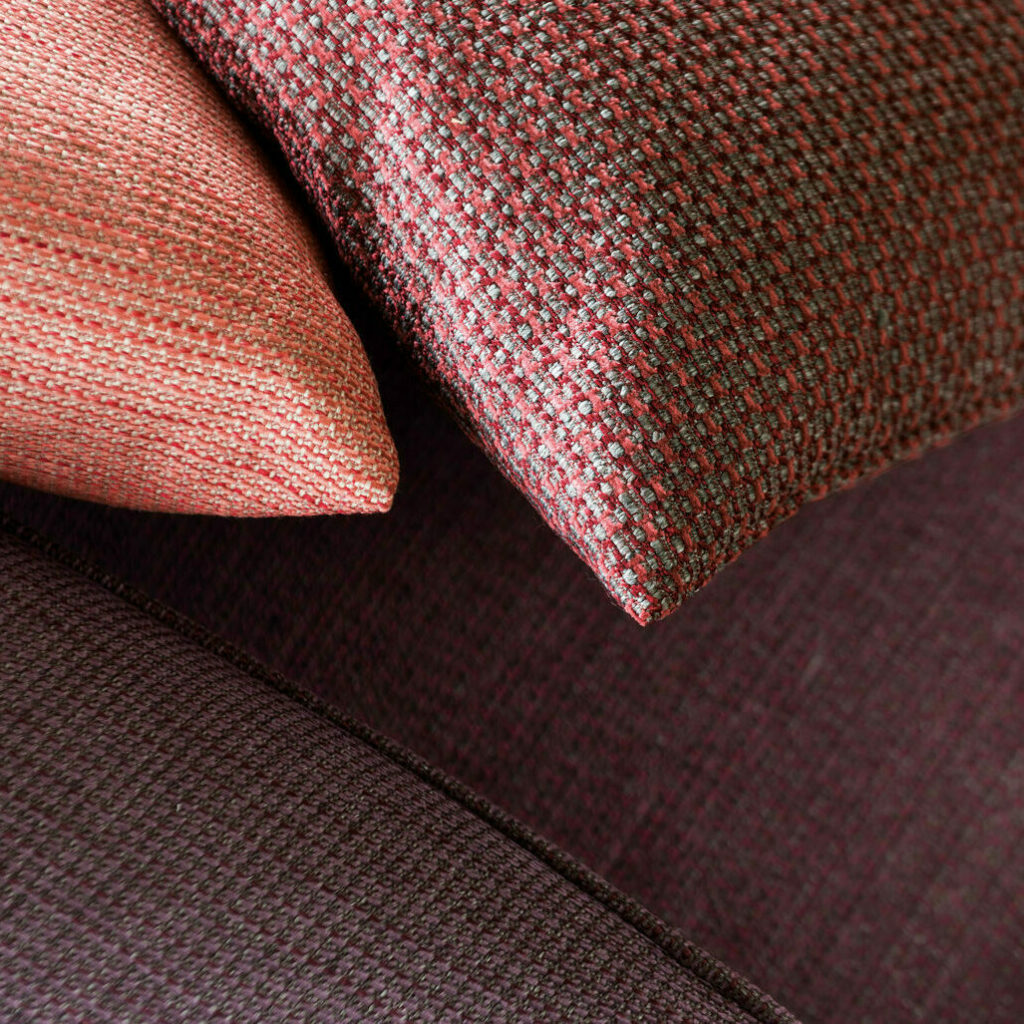
Fabrics like jacquard tend to be tightly woven and therefore more durable.
- Tensile strength: This measures how much force a fabric can withstand before breaking. High-performance fabrics often undergo tests to measure tensile strength to ensure they can handle the stresses of everyday use.
- Double rubs test: This is a standard test used in the upholstery industry to measure abrasion resistance. There are two different testing mechanisms: the Wyzenbeek and Martindale tests. The fabric is rubbed against itself until it shows signs of wear.
- Fabrics that pass the test with high scores (often 30,000+ rubs) are considered durable for heavy use.
Maintenance and Care
Maintenance and care play a huge role in how long high-performance furnishings fabrics actually last. In fact, according to textile-industry studies and experts, care and use conditions often influence durability more than the fabric’s abrasion rating.
Why?
- Dirt, oils, dust, and body salts accumulate in upholstery fibers. These particles are abrasive, and over time they act like fine sandpaper.
- The wrong cleaning method can destroy performance coatings or damage the fabric itself.
As a result, high-performance upholstery fabrics tend to be easier to clean.
Performance against liquid and prolonged exposure to precipitation
Water is another key factor to take into account when it comes to longterm care. Whether you’re designing an open-air lounge or a high-volume cocktail bar, understanding how a fabric handles liquid—from a spilled Negroni to a week of spring showers—is the secret to longevity.
Check out our water-resistant fabric guide for comparisons and full details.
Environmental Considerations and Sustainability
Opting for functional, sustainable fabrics can make a significant difference in the long term: both for your furniture and for the planet.
Eco-Friendly Fibres
Many performance fabrics are being produced with more sustainable materials.
- Recycled Polyester. Recycled polyester (often made from plastic bottles) is being increasingly used in performance fabrics. Fabrics made recycled polyester (aka rPet) are durable, water-resistant, and have a lower environmental footprint compared to virgin polyester.
- Organic Cotton. Organic cotton uses less water and fewer pesticides in its production, making it a more sustainable choice than conventional cotton. It’s also biodegradable, which adds to its environmental benefit. Look for fabrics with the Organic Content Standard certification.
Reduced Chemical Use
Chemical use in the textiles industry extends far beyond the final fabric products.
This is why brands like FibreGuard follow a wide range of chemical-related eco standards to ensure fabric safety and minimal environmental impact. Learn more about how our fabrics are forever free of forever chemicals.
Performance Fabrics and Sustainable Materials
Composition and Recycling
The textile industry is rapidly moving toward greater sustainability.
- The environmental footprint of fabric production is a major focus, with more companies adopting practices to reduce waste, energy consumption, and water usage.
Buy once, buy better
Durability is a key concept in the push towards a more sustainable world, across all kinds of products and sectors. Why?
- Reduces Resource Use & Waste: Durable products require fewer raw materials, reducing production and waste.
- Lowers Environmental Impact: Longer-lasting goods cut down on energy use, carbon emissions, and landfill waste.
- Promotes Better Design: Focus on durability empowers designers to create higher-quality, longer-lasting, and more functional products.
Bottom line? As environmental awareness continues to grow, the production of performance fabrics is becoming more sustainable.





Common Questions About Performance Fabrics
Q. How long do performance fabrics actually last?
High-performance furnishing fabrics are engineered for long life. Their lifespan depends on fibre type, construction, usage, and maintenance, but here are some reliable ballpark figures:
- A fabric with heavy-duty abrasion rating (15,000+ double rubs or equivalent Martindale cycles) that's properly maintained (cleaning, avoid excessive sun, good upholstery support), 10–15 years of useful life is realistic.
- For outdoor or high-exposure applications, solution-dyed fabrics under continuous sunlight or stress maintain good colour and structural integrity over “8–12 years” even under tough condition.
According to a 2016 consumer survey on home furnishings durability cited by DSA Factors, just over one-third of consumers expect to replace a sofa within 5–9 years, while about half plan to keep it for 10 years or more (including 25% who expect 10–14 years and 25% who expect 15+ years of use). These longer ownership expectations help explain the rising interest in performance upholstery fabrics, which are marketed around durability and stain resistance.
Q. Do performance fabrics feel stiff or plastic-like?
Modern performance fabrics, especially FibreGuard, feel indistinguishable from luxury natural fibres. Brands like FibreGuard integrate protection within the fibre rather than applying stiff surface coatings: the result feels soft, supple, and natural.
Q. Are performance fabrics safe for children and pets?
Yes: performance fabrics are generally very safe for children and pets, and many are actually safer than traditional upholstery because they’re engineered to resist stains without needing harsh cleaners.
Q. Can performance fabrics survive pet claws?
Short answer: No, not really. They survive pet claws better than standard upholstery: but not perfectly.
Why performance fabrics handle pet claws better
Most performance fabrics are:
- Tightly woven → Claws have a harder time catching and pulling threads.
- Abrasion-resistant → Designed to resist wear from rubbing.
- Synthetic and strong (e.g., microfibre, polyester, solution-dyed acrylic) → Less likely to snag than looser weaves or natural fibres.
What they won’t do
Performance fabrics are NOT claw-proof. A determined cat can still puncture or snag almost anything. High-pile or open-weave performance fabrics can still be vulnerable.
Bottom line? Performance fabrics significantly improve your odds against pet claws, but they can’t guarantee zero damage. If you want the best protection, choose tight-weave performance synthetics and avoid textured or loose fabrics.
Q. Can performance fabrics be used for indoor furniture?
Yes! They are an excellent choice for indoor furniture—especially high-use pieces like sofas and chairs. Engineered to resist stains, fading, and heavy wear, performance fabrics keep your favorite furniture looking brand new for years.
Q. What sets FibreGuard fabrics apart from other performance fabrics?
What sets FibreGuard apart from standard performance fabrics comes down to how it’s made, how it feels, and what is left out. While many mass-market performance fabrics rely on topical, spray-on chemical coatings to repel spills, FibreGuard treats the fabric at the yarn level.
Unmistakeably soft hand-feel
The fabric retains its natural, premium softness because FibreGuard’s protection is embedded at the yarn level.
Cleaning with Just Water
FibreGuard is engineered to be low-maintenance. Everyday messes, including red wine, coffee, mud, ketchup, and ballpoint pen, can be lifted using just water and a microfibre cloth. For greasy stains, a simple bar of household soap does the trick
Certified Free of "Forever Chemicals"
Historically, stain-resistance was achieved using PFAS (per- and polyfluoroalkyl substances). FibreGuard fabrics are tested for harmful chemicals. They carry the rigorous OEKO-TEX® Standard 100 certification, guaranteeing that the fabric won't off-gas harmful chemicals.
