

How polyester fabric is made: from chemistry to finished fibre
- May 29th, 2026
-
 Fabrics Education
-
 All Spaces
Polyester is everywhere: in your sofa, your gym kit, your car seats, your office chair upholstery. But most people have no idea what it actually is or where it comes from.
Here's the short version.
It starts with human engineering
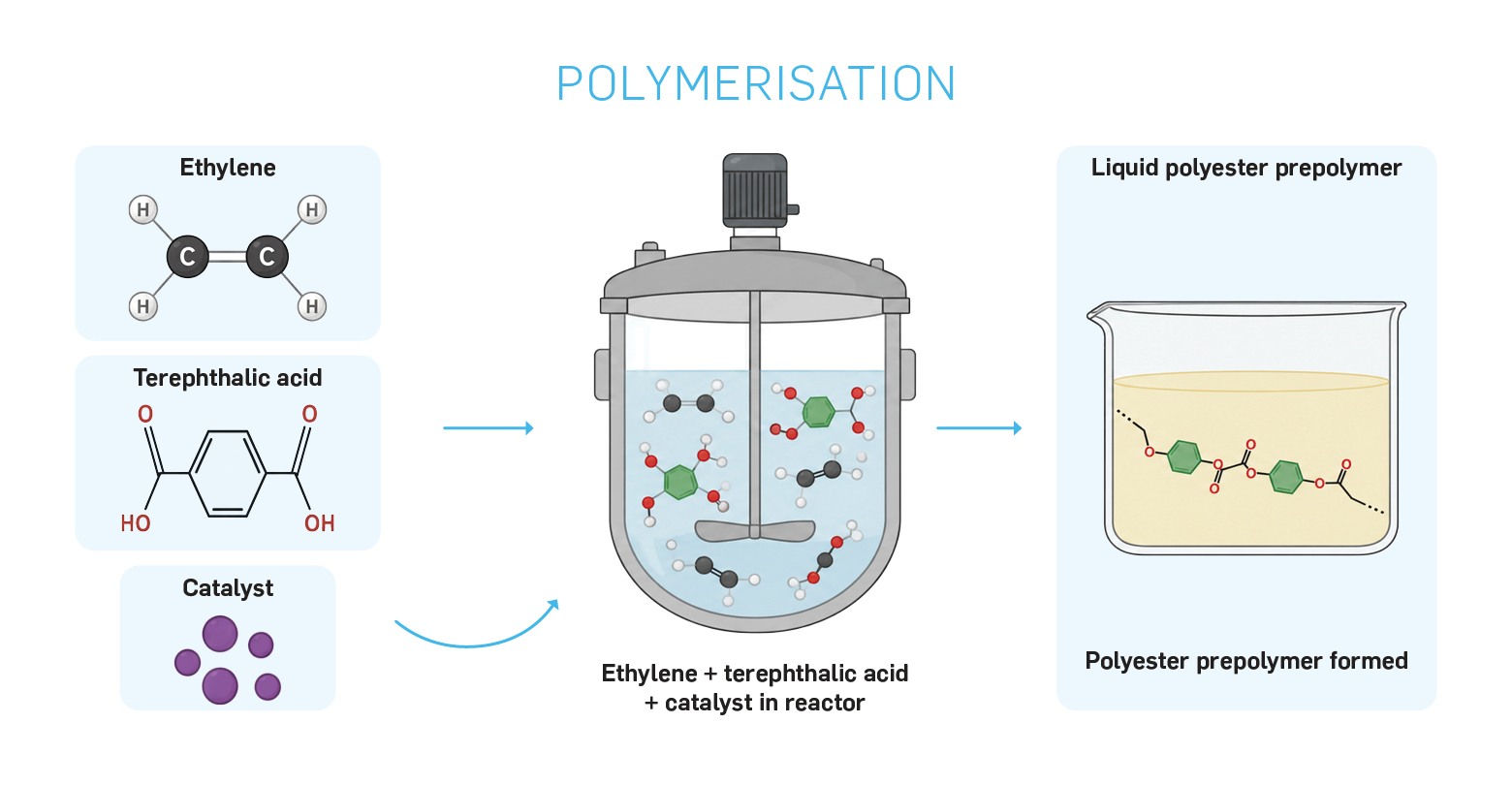
Polyester is a synthetic fibre, which means it's engineered by humans rather than growing outside the way linen or cotton do. The process begins with two chemical building blocks: ethylene and terephthalic acid.
Combined in a reactor with a catalyst, they bond together through a process called polymerisation, forming a liquid material known as a prepolymer.
This is polyester in its earliest form: a viscous liquid that doesn't look remotely like fabric yet.
From liquid to fibre
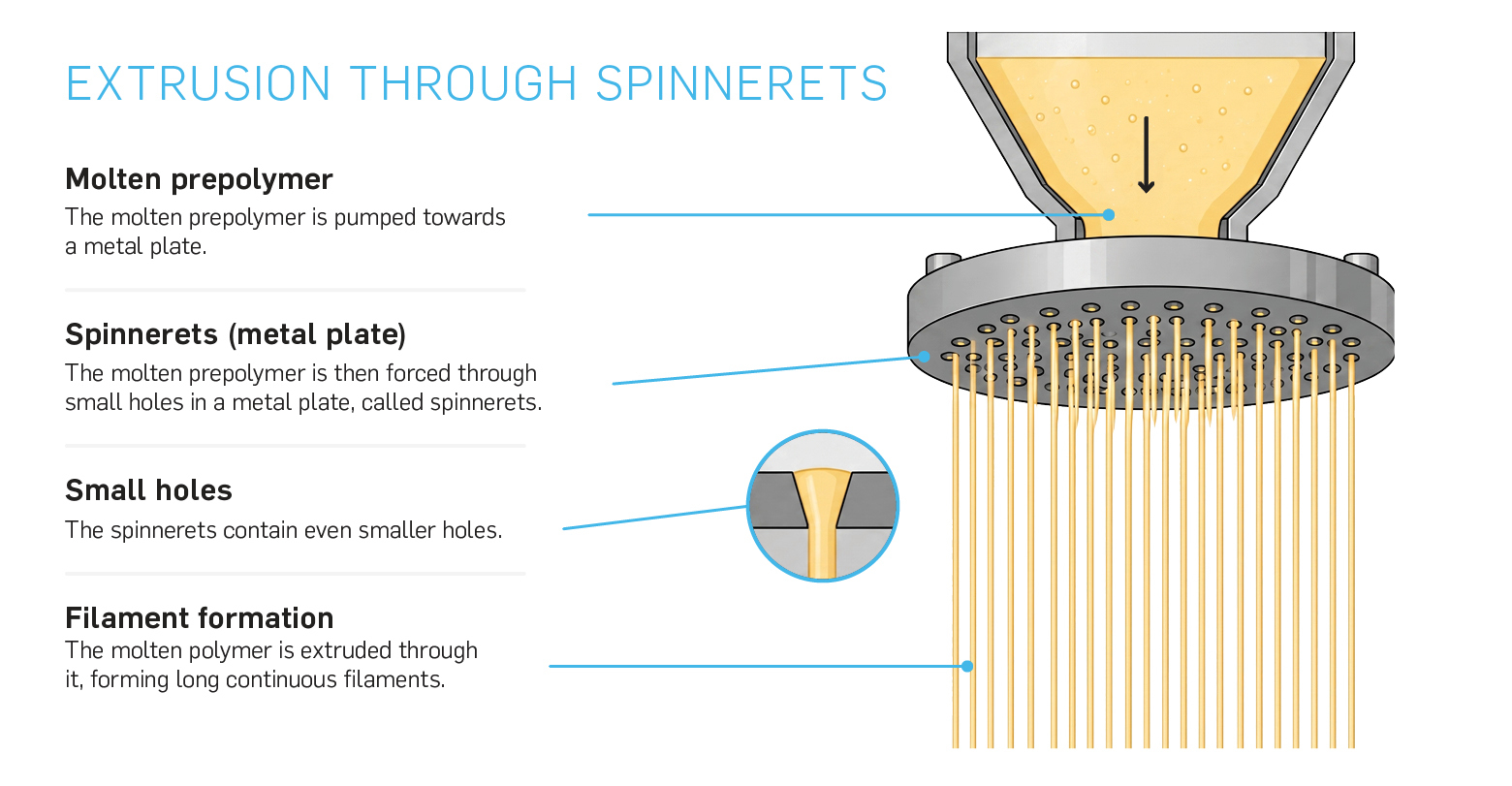
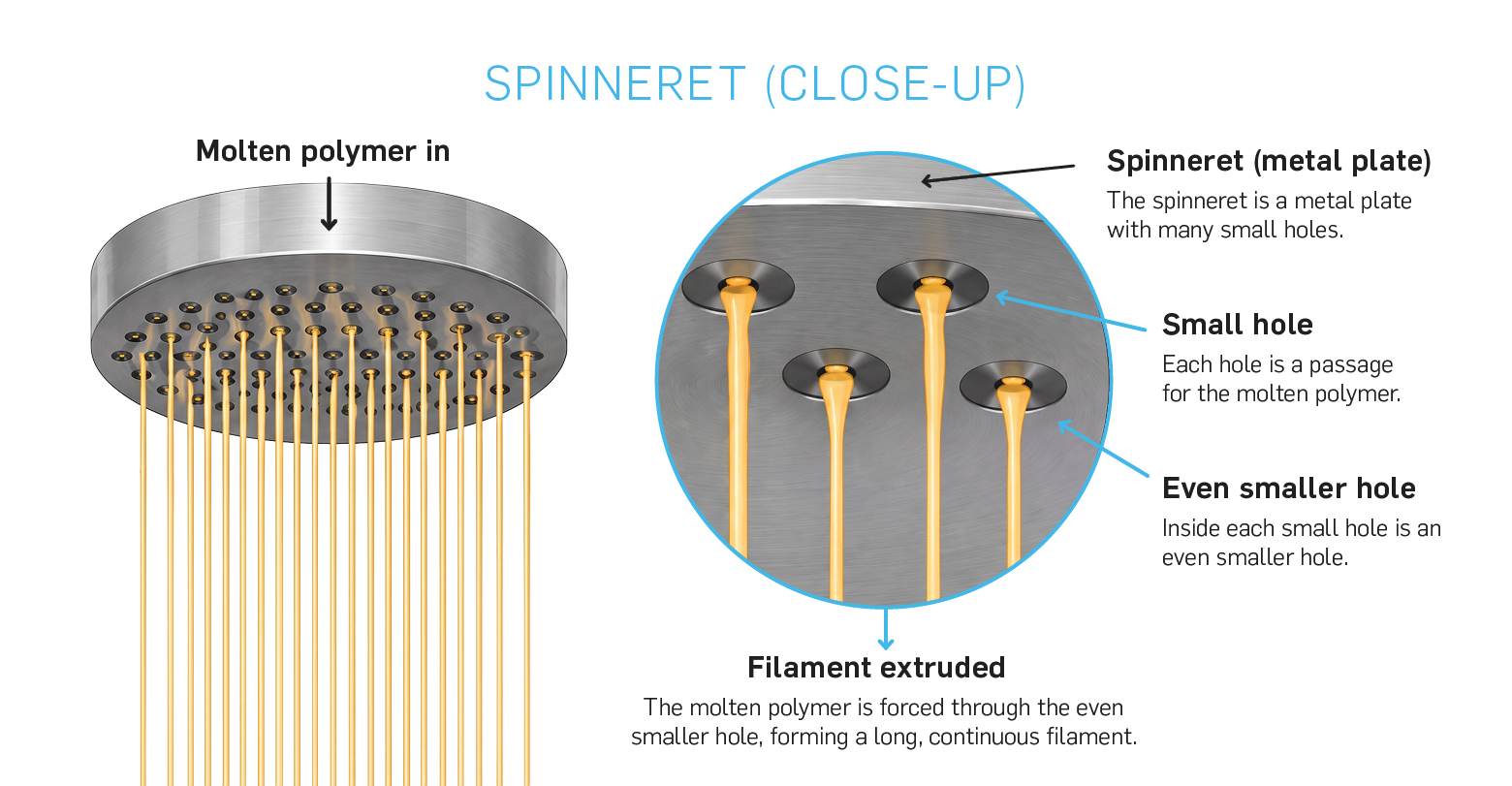
The prepolymer is heated until molten, then forced through a device called a spinneret: a metal plate perforated with dozens of tiny holes. Each hole produces a single continuous filament. As the molten polymer is extruded, it cools and solidifies almost immediately, and the resulting filaments are wound onto spools.
At this stage, the fibres exist but aren't particularly strong. That changes in the next step.
Drawing: making the fabric strong
The filaments are passed through heated rollers that stretch them: a process called drawing. This aligns the polymer chains along the length of the fibre, dramatically increasing tensile strength and improving how the fibre handles tension. It's a small step that makes a significant difference to the end fabric's durability.
Optional: texturing
Not all polyester is smooth and flat. Some applications call for a bulkier, softer hand. In these cases, the fibres go through a texturing process, where high-pressure air crimps or intermingles the filaments to create volume and texture. This is what gives performance and contract fabrics that slightly cushioned, tactile quality.
Finishing
Before the fibres ever become an upholstery fabric, they can be treated. Coatings, dyes, and functional finishes are applied at this stage. Things like moisture-wicking properties, flame resistance, anti-static treatments, or stain-repellent technologies. The fibre goes in; a more capable material comes out.
Weaving or knitting into fabric
Finally, the finished fibres are woven or knitted into fabric.
Why does any of this matter?
Understanding how polyester is made helps explain why it performs the way it does.
The polymer chemistry gives it resistance to wrinkling, fading, and shrinkage. The drawing process gives it strength. The finishing stage is where brands like FibreGuard build in the properties that make a fabric genuinely high-performance: the stain resistance, the durability, the cleanability.
It also explains the environmental trade-offs.
Recycled polyester (typically made from post-consumer plastic bottles) is increasingly used as a lower-impact alternative, supported by transparent content validation standards like the Global Recycled Standard.
Bio-based versions derived from plant feedstocks are also being developed.
Neither is a perfect solution, but the industry is moving.
There's no such thing as a zero-impact fabric.
But knowing how something is made is the first step to making better choices about it. At FibreGuard, we are committed to our responsibility to ensure we find solutions for better products and product life cycles. Read more about our sustainability commitment here.
 Design Inspiration
 Hospitality