
Washable Sofa Slipcovers vs Fixed Upholstery: A Plain-English Guide for Designers
- July 10th, 2026
-
 Fabrics Education
-
 All Spaces
Are washable couch covers better than fixed upholstery?
Washable sofa covers and fixed upholstery solve different problems for your clients: covers allow a complete reset of the fabric, while fixed upholstery wins on fit and polish.
But there's a third factor that changes the whole calculation: the fabric itself.
Much of the covers-vs-fixed debate exists because ordinary upholstery fabric is seen as hard to clean, even though fabric technology has moved on. Specify a modern performance fabric, and everyday mess stops being the deciding factor.
For most residential projects, the most forgiving specification is a combination: performance fabric that can be wiped clean daily, plus removable covers that can occasionally be stripped and washed.
What's the Difference Between Washable Sofa Covers and Fixed Upholstery?
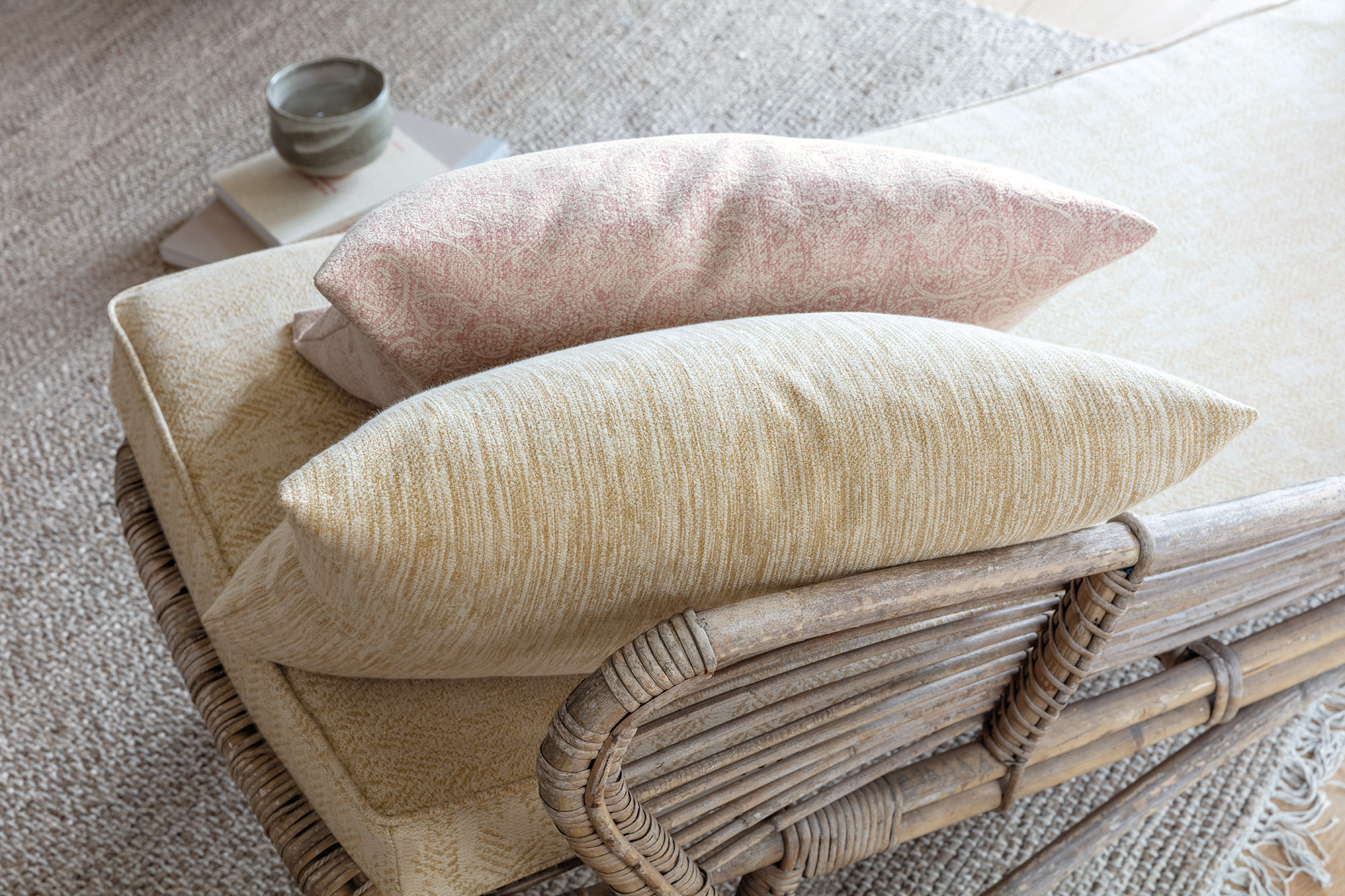
Washable sofa covers are removable fabric covers with zips, buttons, or hook-and-loop fastenings.
Fixed upholstery is fabric attached directly to the sofa frame and cushions. It isn't removed; it's cleaned in place with spot cleaning, steam, or professional services.
Washable covers are about being able to reset the fabric completely, while fixed upholstery is about a permanently tailored, seamless look.
When Do Washable Sofa Covers Make Sense?
Removable covers are the stronger recommendation when:
- The client's household is high-use or unpredictable: children, pets, meals on the sofa, busy family living rooms. It’s the same if the piece is destined for a rental property or holiday let.
- Odour management matters over the fabric's lifespan: pets, open-plan kitchens, high-occupancy spaces.
- The scheme is likely to be refreshed. Covers allow a colour or fabric update without reupholstering or replacing the frame.
In practice, removable covers give your client:
- The option of a full laundering cycle a few times a year, rather than in-situ cleaning only.
- Machine or sink treatment for stains that spot cleaning can't shift.
- Replaceable soft components. Worn covers can be re-made while the frame and fillings stay in service, extending the piece's usable life.
- They earn their place wherever the sofa takes the most wear in a home and a complete reset needs to be possible.
An important note, though: the biggest misconception is that 'washable covers' automatically mean 'easy maintenance'. Some covers are simple to remove. Some are basically an afternoon project. Pay more attention to fabric quality than the washable label itself.
When Is Fixed Upholstery the Better Choice?
Fixed upholstery is the right call when the design priority is:
- The upholstered look is part of the design intent, and visible closures or seam movement would compromise it.
- Where major spills are unlikely and the sharpness of the finish matters more than full fabric removal, fixed upholstery is usually the better specification.
What Are You Signing Your Client Up For Day to Day?
Whichever route you recommend, it comes with a maintenance reality your client should understand upfront.
For fixed upholstery, everyday care means:
- Vacuuming crumbs, dust and pet hair.
- Blotting spills immediately with a cloth.
- Using fabric-safe cleaners or a steam cleaner on localised stains.
For washable covers, everyday life still starts with spot cleaning, but the client has a backup option:
- Remove the cover and treat it in the sink or washing machine (where the fabric and care label allow).
- Wash the whole set when the sofa starts to feel generally grimy, not just visibly stained.
The trade-off to flag: removable covers add effort.
Your client will need space to dry them flat or hang them, and the patience to work them back on. Some clients will happily take that on for the peace of mind; others won't. It's worth knowing which kind you're designing for.
Do Washable Sofa Covers Last as Long as Fixed Upholstery?
Durability depends less on covers-vs-fixed than on the fabric itself. For the full low down on upholstery, drapery and durability, check out: How to choose durable upholstery fabric (a practical guide).
A high-quality performance fabric will comfortably outlast a bargain one, whether it's fixed or removable. That said, the two options age differently:
- Fixed upholstery keeps its tailored look because the fabric is tensioned once and left in place. It isn't stretched on and off repeatedly.
- Washable covers go through more handling and washing cycles. With ordinary fabric, that's where problems start: fading, loosened fit, softened seams. And if the stain protection is a surface treatment, repeated washing gradually strips it away.
Fabrics with stain resistance built into the fibre don't have this weakness because the protection is part of the material, and it can't wash out. If a client's covers will see regular laundering, this distinction is worth checking before you specify.
There's also a hidden advantage to covers: only the covers need replacing, not the piece. The frame doesn't go to waste when the fabric looks tired, and the knock-on effect is that the sofa as a whole lasts longer, giving you a stronger sustainability story for the project.
Which Is Better for Clients with Pets and Kids?
For design projects in family homes, the real questions are: how often will this get dirty, and how much stress does that put on the client?
Neither option stops the mess from happening.
What covers change is the anxiety: the client knows everything can come off and start again. For some households, that reassurance is the difference between a sofa they enjoy and a sofa they police.
Got pets? Don't worry. FibreGuard's child and pet-friendly fabrics are technologically advanced, so your cleaning doesn’t have to be. Contact us today for full stockist and reseller information for your specific region.
What About Comfort and Appearance?
Comfort is mostly down to cushions and frame, but the fabric approach changes how the piece reads in a scheme.
Fixed upholstery stays smoother because that polished, uninterrupted line, with piping and seam placement stays exactly where they were tailored to sit.
Washable covers, in comparison, have a slightly softer, more relaxed look. Even well-tailored covers may show closures or need the occasional smoothing out. On the other hand, they let the client experiment with colour and texture as the years go on: useful when a scheme is designed to evolve.
Some schemes want the casual, lived-in energy of covers; others need the crisp lines of fixed upholstery. Neither is wrong, they just serve different briefs.
Key takeaway: how do you decide?
Don't force a client to choose between a pristine look and practical living. The hybrid specification gives them the best of both worlds: high-end structure where it counts, and effortless washability where life actually happens.
The Core Breakdown
- Washable Covers (The Chaos Solution): Removable "jackets" stripped off for washing. Best for deep grime, stubborn odors, pets, and family life.
- Fixed Upholstery (The Tailored Solution): Permanently attached for a crisp, high-end finish. Relies on spot cleaning and professional care.
- The Winning Formula (The Hybrid): Pair an easy-clean performance fabric with removable cushion covers for the occasional full reset.
3 Quick Diagnostic Questions
1. How do they actually live?
Most households are far messier than they’ll admit in a design consultation.
- Go Washable if: You spot pets, sofa meals, kids' craft projects, or frequent spills.
2. How much does a tailored finish matter?
- Go Fixed if: The client will notice every seam, wrinkle, or slight looseness.
3. Upfront cost vs. long-term maintenance?
- Go Fixed if: They want a low-hassle, pay-once option in a durable fabric.
- Go Washable if: They want control over how the piece ages over time.
Looking for more upholstery fabric comparisons? Check out our Upholstery 101 page.
 Design Inspiration
 Hospitality