
Corduroy upholstery: a buyer's guide to the fabric that keeps coming back
- January 23rd, 2025
-
 Product Technology
-
 Clean & Cosy Homes
Corduroy upholstery
A buyer's guide to the fabric that keeps coming back
Since its mid-century heyday, corduroy has never fully gone away...and right now it's showing up on sofas, armchairs, ottomans, and dining chairs across residential interiors and hospitality spaces alike. It reflects something more enduring than just a passing stylish fad: corduroy is one of the few furnishing fabrics that manages to be tactile, durable, and visually interesting all at once.
If you're considering it for a furniture project, here's what you actually need to know.
Why corduroy keeps coming back
The appeal of corduroy as an upholstery fabric isn't hard to explain. The ribbed pile surface (those distinctive raised ridges) creates immediate tactile interest without relying on pattern. It reads differently depending on the light, adding depth and dimension to even a simple sofa shape.
It also travels well across interior styles. Wide-wale corduroy brings warmth and retro character to mid-century or maximalist spaces. Fine-wale reads much more quietly, and it works in contemporary and formal interiors without announcing itself.
There's a practical dimension too. Corduroy's pile construction gives it real structural depth, which translates to resilience under regular use. It's one of those fabrics that tends to look better with a little wear rather than worse.
Understanding wales: the most important thing to know before you buy
The ridges in corduroy are called wales. Wale count is what determines how the fabric looks and feels. Wales are formed during the weaving process: extra weft yarns are woven in with long floats, then cut and brushed to create the characteristic pile ridges. The number of wales per inch determines their width, and that's where the design decisions begin.
There are three broad categories:
- Fine-wale (16–21 wales per inch) Very narrow ridges with a refined, almost subtle texture. Fine-wale corduroy suits formal furniture pieces and contemporary interiors where you want the texture without the statement.
- Medium-wale (8–15 wales per inch) The most versatile option. Classic-looking, works across a wide range of furniture types and spaces, and tends to be the most forgiving in terms of colour and proportion.
- Wide-wale (fewer than 8 wales per inch) Bold, tactile, and visually strong. Wide-wale is the version most associated with the retro revival, and it works particularly well on larger pieces: sofas, generous armchairs, statement footstools. On smaller furniture, it can feel overpowering.
A practical rule of thumb: larger pieces can carry broader wales; smaller chairs, cushions, and accent pieces tend to suit finer ribs.
If you’d like to learn more about specialty weaves, textures, and practical care tips, explore our other guides on upholstery fabrics.
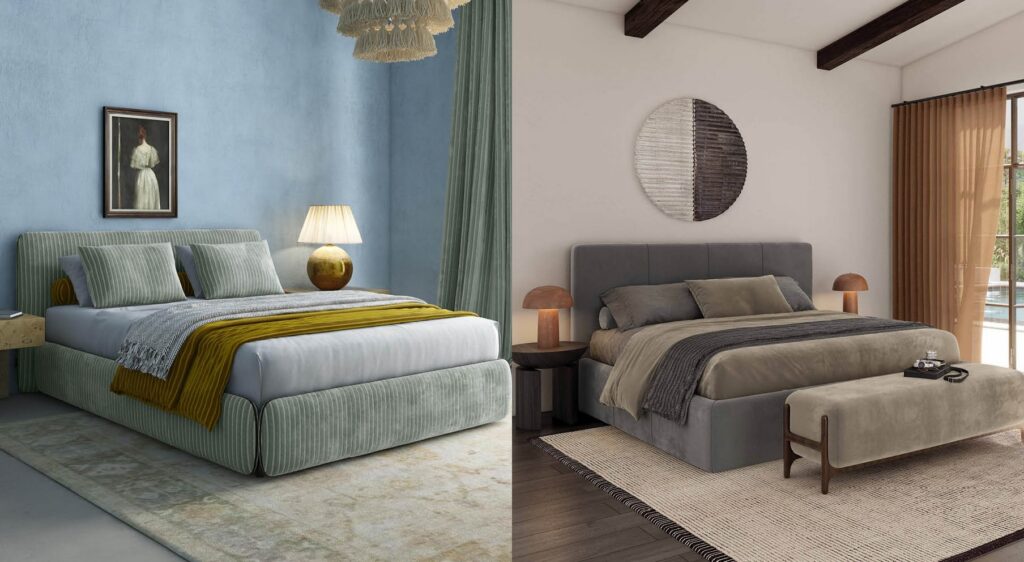
Colours that work
We’re textile performance specialists, not interior stylists, but we do see some colour directions that reliably flatter corduroy’s texture.
🔎 Matter of fact: gold and terra are the most in-demand colours when it comes to FibreGuard's corduroy upholstery sales.
Golds and mellow yellows
Corduroy and golden tones are a natural match. Honey, amber and soft mustard yellows pick up the fabric’s warmth and ribbed structure, catching the light in a way that feels glowing rather than loud. These colours give a sunlit, optimistic feel to a space while still reading as sophisticated rather than playful.
Terracotta and soft oranges
On the richer side of the spectrum, terracotta, burnt orange and clay tones emphasise corduroy’s tactile, inviting character. They nod to a retro aesthetic without tipping into costume, especially when paired with neutrals, woods, or stone. These shades feel grounded, cosy and welcoming, making them strong options for living rooms, reading corners and hospitality seating.
Corduroy upholstery performance: what to look for before you fall in love
Corduroy is one of those fabrics that feels instantly cosy and nostalgic, but today’s upholstery corduroy is also designed to be seriously hard‑working. Here are a few simple things to check so your new sofa or armchair looks good for years, not months.
1. How well does it handle everyday wear?
Sofas go through a lot: sitting, sliding, kids climbing, pets napping. That’s where abrasion testing comes in.
These tests, called Wyzenbeek (ASTM D4157) and Martindale (EN 14465), move fabric back and forth thousands of times to see how well it stands up to rubbing and wear. Think of it as the fabric’s fitness level: the higher the number, the more it’s built for real life.
Find full abrasion test information and standards: Abrasion Testing: Wyzenbeek & Martindale Compared.
2. Why pile direction matters for the look
Corduroy has a pile (a soft, raised surface) that runs in one direction, known as the nap. When light hits it, panels cut with or against the nap can look lighter or darker, even if they’re from the same roll. A good upholsterer will:
- Cut all panels in the same direction, and
- Check the fabric in natural light before cutting.
That’s how you avoid a patchy effect and get that beautiful, even corduroy glow across the whole piece.
3. Stain resistance on textured fabrics
One thing to keep in mind with corduroy is that its wales can give spills and stains extra places to hide. On traditional finishes, liquids may sink into those grooves and be harder to remove.
Many modern upholstery corduroys now include stain‑resistant technology built into the fabric structure, rather than just added as a surface spray. When that’s the case, spills are more likely to sit on the surface first, giving you a little extra time to blot and clean before they soak in.
If you live with kids, pets, or frequent guests, it’s worth asking how the stain resistance is achieved and checking the cleaning instructions so you know what to expect in day‑to‑day use.
Full cleaning instructions for our corduroy fabrics are on the FibreGuard how-to-clean page.
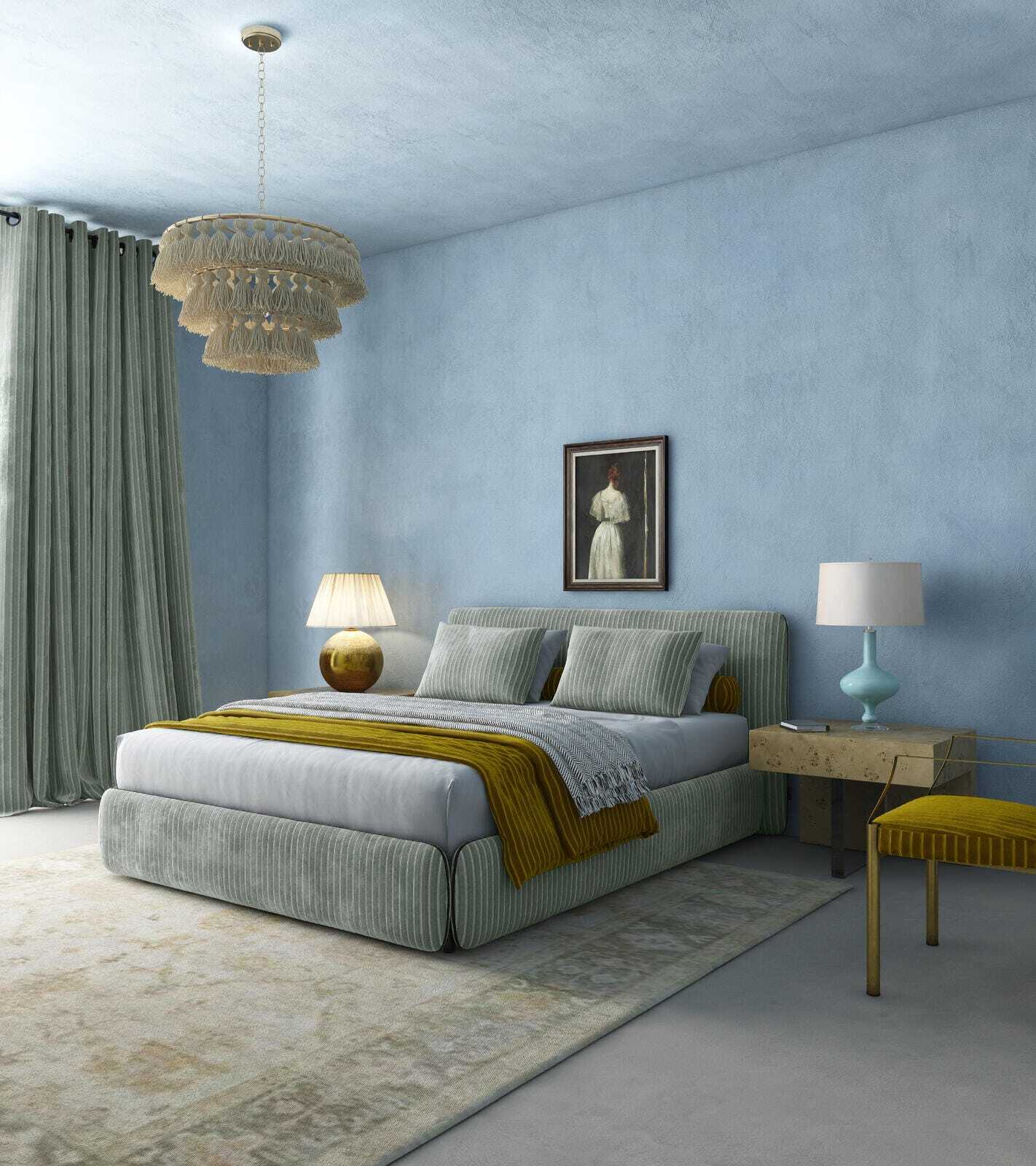
Is corduroy right for your project?
If you want a fabric that contributes texture and character without relying on pattern corduroy is a strong choice. The wale width gives you real design control, the colour range is genuinely broad, and with FibreGuard's performance specs, it handles the demands of everyday life without the usual maintenance anxiety.
Browse our fabrics in the FibreGuard digital twin collection. Find a design you like? Get in touch with us: we have a global presence, everywhere from the USA to Europe to Australia, the Middle East and South East Asia.
Let’s wrap up
Understanding textured fabrics like corduroy helps you appreciate the artistry behind upholstery materials and how they transform a piece of furniture. At FibreGuard, we’re passionate about performance fabrics that combine durability with luxurious, soft-touch design. If you’d like to learn more about specialty weaves, textures, and practical care tips, head on over to FibreGuard: Creating Market-Leading Soft Neutral Fabrics.
 Design Inspiration
 Case studies
 All Spaces