
How to pick the best outdoor fabrics for your unique spot in the world
- May 8th, 2026
-
 Product Technology
-
 All Spaces
Ever left a cushion out for a single season and watched it fade into a sad, washed-out version of itself?
This is why outdoor fabrics exist. Essentially, they’re high-powered upholstery and drapery fabrics that are engineered to handle specific environmental stressors: UV radiation, moisture, and extreme temperature swings. Choose the wrong fabric for your climate, and you're looking at faded cushions and mildew before the year is out.
However...
This is entirely avoidable.
The key is matching your fabric selection to the dominant climate stressors in your region. But what separates one durable outdoor fabric from another?
Let's break it down by climate.
Summary: The best outdoor upholstery depends on your climate: choose solution-dyed polyolefin for high-sun areas to prevent fading, and anti-microbial, water-repellent fabrics for coastal regions to prevent mildew.

Arid Climates: Managing High-Intensity UV Exposure
If you've ever left a cushion out in direct Middle Eastern sun for a season, you already know the enemy: UV radiation.
Relentless sun exposure kicks off a chemical process that breaks down polymer chains, leading to fibre brittleness and pigment degradation (that's the technical way of saying "fading").
Combine that with abrasive desert dust and sand, and the mechanical wear on a textile can be significant. We're talking about an environment that actively wants to destroy your upholstery.
Cheerful, right?
The solution: solution-dyed polyolefin
For high-UV environments, solution-dyed polyolefin is the technical benchmark.
Unlike traditional piece-dyed fabrics, where colour is applied only to the surface, solution-dyed fibres have their pigments integrated during the initial extrusion of the polymer.
In plain English: the colour goes all the way through, not just on top.
So what does that actually mean for your project?
- UV stability — because the colour is locked into the fibre structure itself, it's inherently resistant to fading. No surface-level dye to strip away.
- Thermal resilience — these synthetic fibres are engineered to remain flexible under high surface temperatures, preventing the "brittling" effect that's common in standard textiles. (If you've ever picked up an outdoor cushion that crunched slightly under your fingers: that's brittling.)
- Particle resistance — a tight weave structure is essential here to stop fine sand and dust from working their way into the interstitial spaces of the fabric, which can cause internal abrasion over time. Think of it as building a wall against the desert.
👉 👉 Get in-depth information about colourfastness, solution-dyed fabrics and more: 5 colourfastness tests that secure FibreGuard fabrics’ optimal fade protection.
Case study insight: luxury hospitality in Al Jaddaf, Dubai
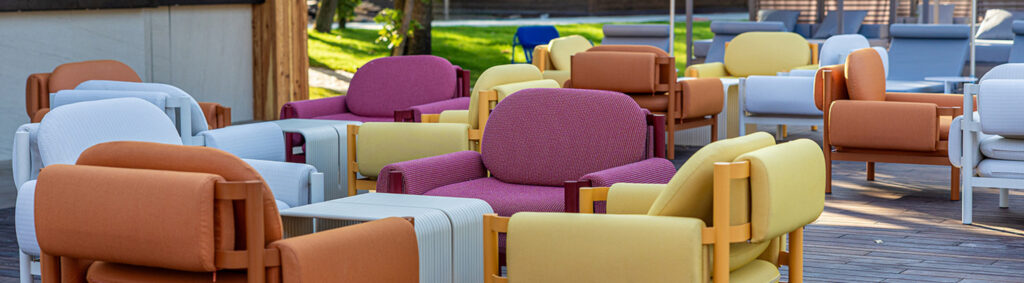
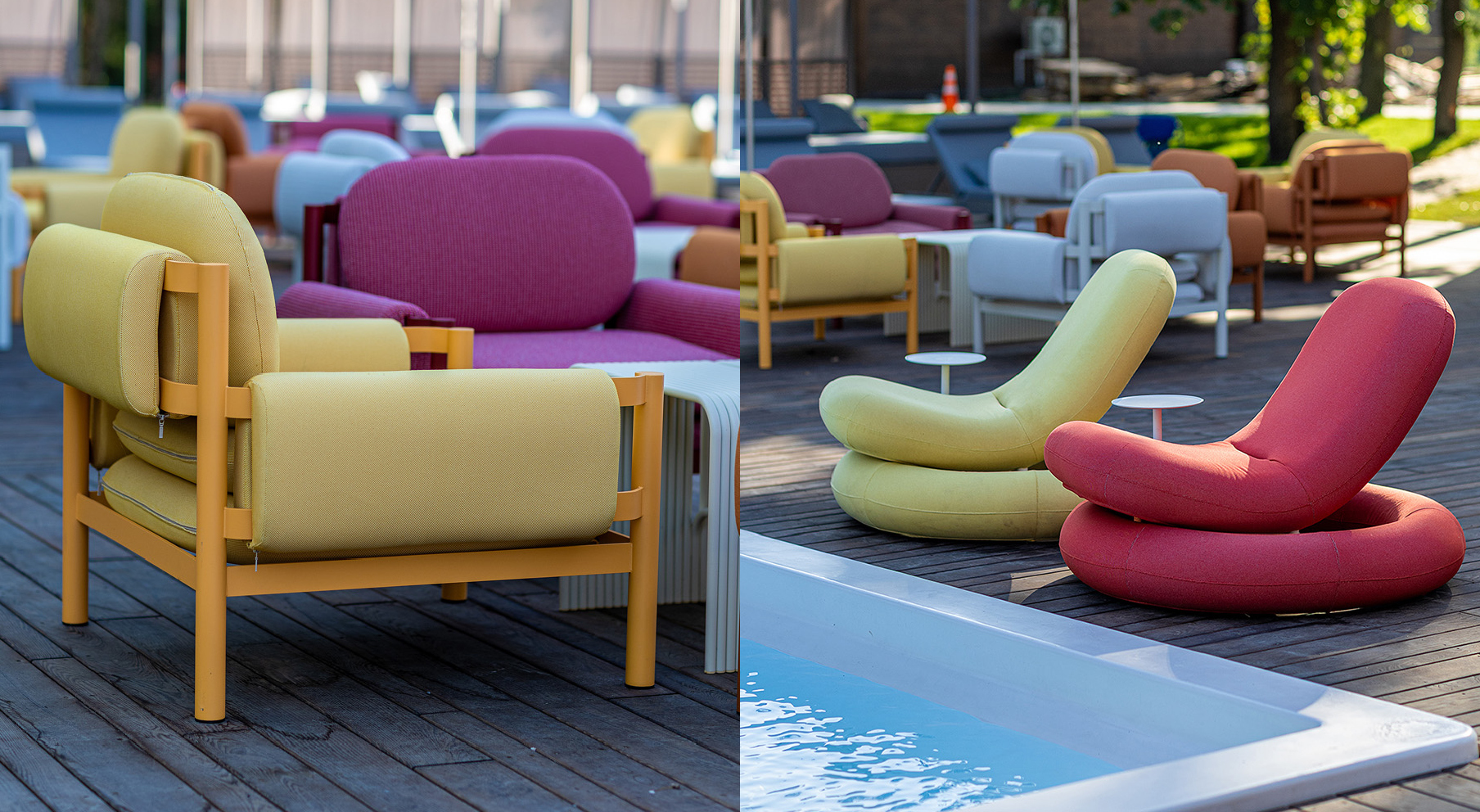
The Terra Man Restaurant & Pool Lounge, located at the Marriott Hotel, Al Jaddaf, Dubai, is a great example to showcase the needs of this climate. Textiles here face a trifecta of Gulf sun, chlorinated mist, and fine sand. In contexts like these, fibre-level engineering is the only way to ensure a polished aesthetic remains viable year-round.
Surface treatments simply won't cut it.
🏖️What to prioritise in hot, arid climates 🌡️
Your fabric checklist for these environments should focus on:
- High UV stability with proven colourfastness (no faded outdoor cushions allowed!)
- Solution-dyed fibre construction to prevent fade degradation
- Heat-resistant synthetic fibres that won't become brittle
- Tight weave structures to resist dust and sand penetration
- Low-maintenance surfaces that allow easy brushing or vacuuming.
👉 Today we're touching on the different needs from climate to climate, but if you'd like to read more about outdoor fabrics in general, how they're made, what they're made of, etc., then visit FibreGuard Outdoor
Coastal and Humid Climates: Preventing Mould and Mildew
When you're specifying for regions with anything from salt-laden coastal breezes to deep humidity, the focus shifts from sun resistance to breathability and moisture transit.
Microbial defence is your first priority. Modern performance textiles incorporate anti-microbial properties that actively discourage fungal spores from taking hold.
Why? Because once mould gets a foothold, the fabric itself is structurally damaged, on top of being an eye-sore (and stinky).
Rather than relying on heavy waterproof coatings (which can trap heat and feel like sitting on a bin bag, not exactly the vibe), climate-ready fabrics use fibre-level water repellency. This allows the fabric to breathe, letting internal moisture evaporate rather than trapping it against the foam. In practice, this is the difference between a fabric that works with your climate and one that fights it.
And don't forget salt-air resilience. Coastal zones require fibres that won't degrade when exposed to the corrosive nature of salt spray: a factor that's easy to overlook until it's too late.
👉 👉 For a deeper dive into waterproof vs. water-repellent vs. water-resistant terminology, see our full breakdown: Water Resistant vs Water Repellent vs Waterproof: Key Differences Explained.
Regional application
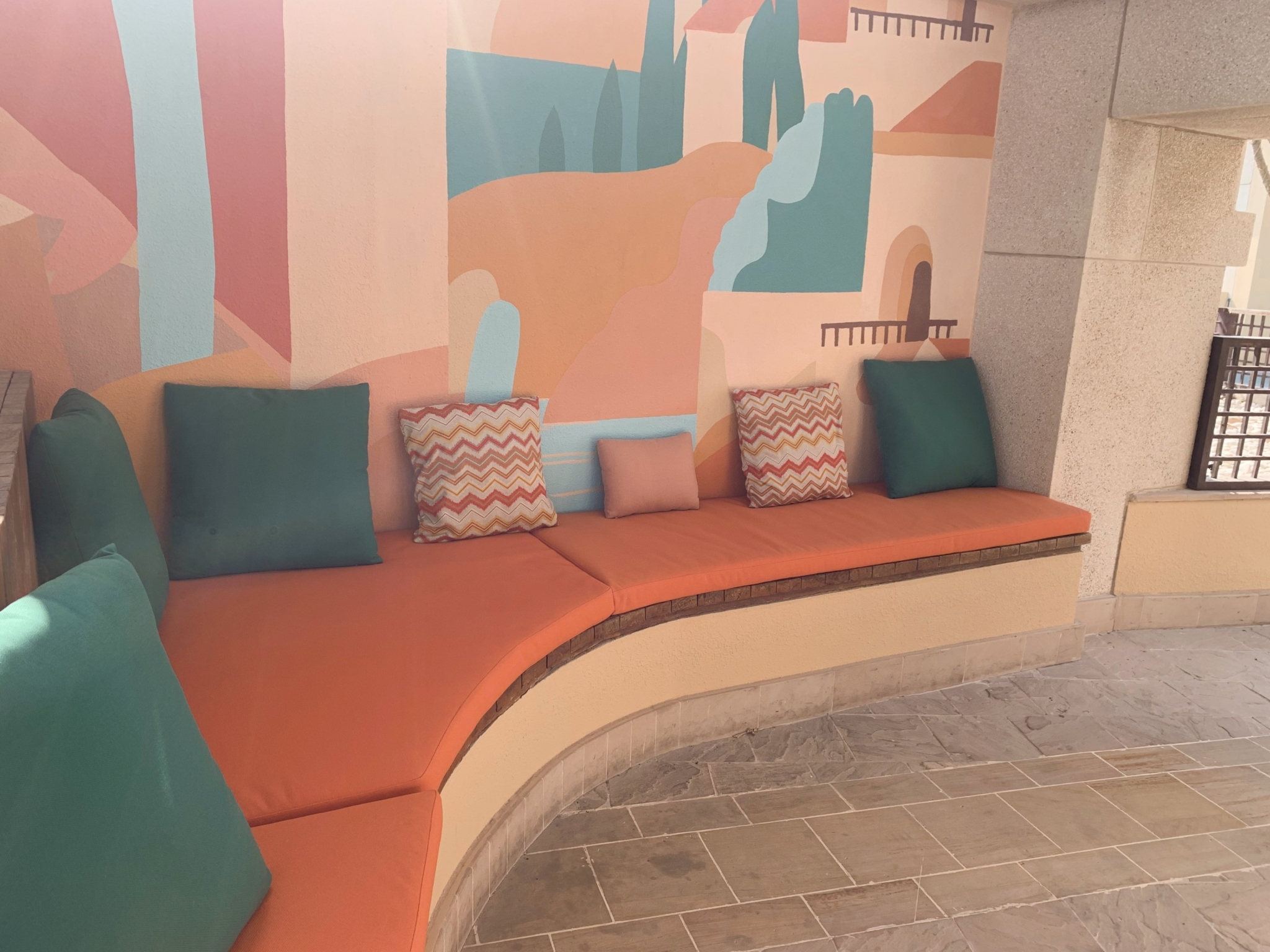
A Mediterranean-style climate like Cape Town, with its wet winters and salt breezes, is something of a masterclass in moisture challenges.
Collections engineered for quick-dry performance ensure that poolside furniture survives seasonal shifts without structural or aesthetic decline. Here, moisture control is the dominant variable. If moisture lingers, performance declines. It's as simple as that.
🌅What to prioritise in humid and coastal climates💧
Focus on:
- Anti-microbial and anti-mildew performance
- Fabrics with quick-drying compositions such as polyolefin reduce moisture retention
- Fibre-level water repellency (not heavy waterproof coatings) for breathability
- High durability to resist salt-air degradation
- Breathable construction to prevent trapped humidity.

Temperate Climates: The "All-Weather" Challenge
And then there are temperate climates, characterised by one thing above all else: fluctuation. A bit of everything, all the time.
These zones need a "generalist" textile that can handle sudden rain, high-summer UV, and autumn dampness without missing a beat.
But here's what makes temperate zones particularly interesting: because the weather is (relatively) liveable for more of the year, outdoor furniture tends to see higher frequency of use. So, abrasion resistance and stain release become critical alongside weather performance. Your terrace isn't just surviving the elements, it's hosting dinner parties, weekend brunches, and the occasional impromptu gathering that somehow lasts until midnight.
In use: temperate climates and a stunning outdoor beach bar
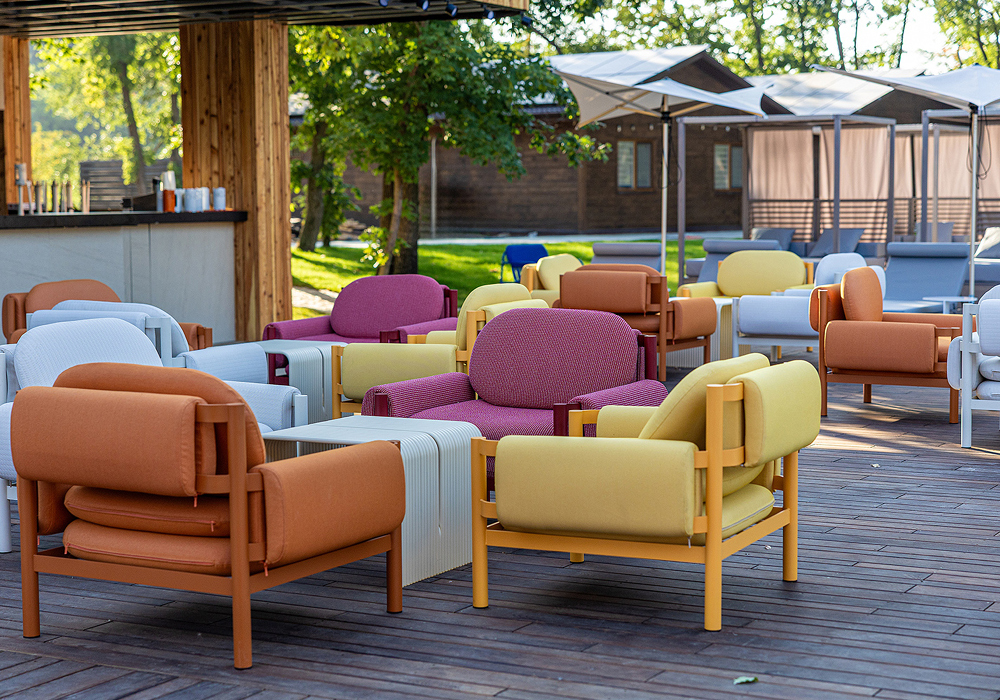
For a hotel beach club resort operating in this kind of climate, consistency is everything. The pool loungers, dining chairs, and outdoor sofas might cycle through dozens of guests each day, from breakfast service to late-night cocktails.
That means the upholstery needs to perform like a true all-rounder: able to shed rain, resist UV fade, and release stains easily, all while maintaining a soft, premium hand-feel. In these high-traffic spaces, abrasion resistance is just as important as weather protection.
🌦️ What to prioritise in temperate, changeable climates ☀️
Versatility and maintenance are the primary drivers of value here. You're looking for:
- Balanced UV and moisture resistance
- All-weather durability across seasonal shifts
- Stain-resistant and easy-clean performance
- Strong abrasion resistance for high-use outdoor living
- Stable fibre performance through temperature fluctuations.
Universal Standards for All-Climate Specification
Avoid topical or spray-on treatments wherever possible. Specify fibres that are naturally non-absorbent and water-repellent. Regardless of geography, a "climate-ready" textile should meet three universal pillars:
✅Pillar One: Fibre-level performance.
This ensures that stain resistance and durability are baked in from the start and won't strip away during cleaning or heavy weathering. (This is the single biggest distinction between a fabric that lasts and one that merely starts well.)
✅Pillar Two: Verified eco-certifications.
Professional specification demands third-party verification as a quality filter. When evaluating any outdoor textile supplier, look for certifications like OEKO-TEX® STANDARD 100 (confirming chemical safety and non-toxic production) and GRS (Global Recycled Standard) for environmental compliance. These credentials tell you that the fabric has been independently tested, not just marketed.
Visit our full resources on textiles testing at From Belgium to the World: How Labotex Certifies Fabric Quality and Safety and sustainability in textiles here: Sustainability: PFAS free fabrics.
✅ Pillar Three: Human and animal safety.
In high-traffic hospitality or family environments, textiles must be non-toxic and scuff-resistant. The goal is a surface that survives real-world use (by pets, kids and families alike) without requiring aggressive chemical intervention.
Look for fabrics where easy-clean performance is engineered at the fibre level, not applied as an aftermarket coating.
The Technical Proof: Quantifying Performance
In the world of performance fabrics, quality isn't a subjective "feel" — it's a measurable data point. When evaluating outdoor fabrics for large-scale projects, professionals look to standardised testing to predict long-term viability. And honestly, once you understand these three metrics, you'll never look at a fabric swatch the same way again.
Lightfastness (UV stability)
To determine how a fabric handles relentless sun, it undergoes accelerated weathering tests — essentially, a simulation of years of exposure condensed into a lab setting.
Results are graded on a “Blue Wool Scale” from 1 to 8. For high-exposure projects — think poolside hospitality, exposed terraces, or Gulf-state installations — Grade 7 or 8 is the professional benchmark. That grade ensures thousands of hours of sun exposure before any perceptible fading. If a supplier can’t give you a lightfastness grade, that’s a red flag. 🚩
Mechanical durability (abrasion resistance)
This one simulates the friction of daily use — sitting, sliding, shifting, and all the general wear that comes from people actually living on furniture. The standards here are Martindale (international) or Wyzenbeek (US) "rub tests."
👉 👉 For a full breakdown of how we lab-test for 30,000+ rubs, see Abrasion Testing: Wyzenbeek & Martindale Compared.
Anti-microbial assessment
In humid zones, the fabric’s relationship with moisture is the defining metric. When specifying for these environments, ask for anti-microbial test results against recognised standards such as ASTM E2149 or ISO 20743.
A strong result confirms the textile’s ability to inhibit bacterial and fungal growth, meaning the fabric doesn’t just stay dry, it actively prevents the microscopic colonisation that leads to odours and structural rot.

Finding the Best Fabric for Outdoor Furniture
So, what does all of this come down to? Outdoor fabric performance is a measurable science, not a guessing game. Climate-led specification reduces replacement cycles, lowers maintenance overheads, and protects the long-term value of a project.
Ready to specify? FibreGuard Outdoor fabrics are engineered with solution-dyed polyolefin, fibre-level stain resistance, and anti-microbial protection — built for every climate covered in this guide.
Professional Textile Glossary
- Solution-dyeing: A process where colour is added to the liquid polymer before the fibre is extruded, ensuring the colour is consistent throughout the entire thread.
- Polyolefin/olefin: A synthetic fibre (polypropylene or polyethylene) known for being incredibly lightweight, fast-drying, and resistant to staining and sunlight.
- Colourfastness: The resistance of a material to fading or running when exposed to light, washing, or atmospheric gasses.
 Design Inspiration
 Fabrics Education