
What is 'slub' yarn? What are slubby fabrics?
- April 8th, 2026
-
 Fabrics Education
-
 All Spaces
What Does “Slub” Mean in Fabrics?
In textiles, a slub is a slightly thicker section of yarn that shows up as a tiny bump or nub on the surface of a fabric. When there are lots of these along the yarn, the fabric looks gently irregular and textured: what people call slubby. In upholstery, that “perfectly imperfect” fabric texture is an intentional design choice that makes fabrics feel relaxed, inviting and quietly luxurious.
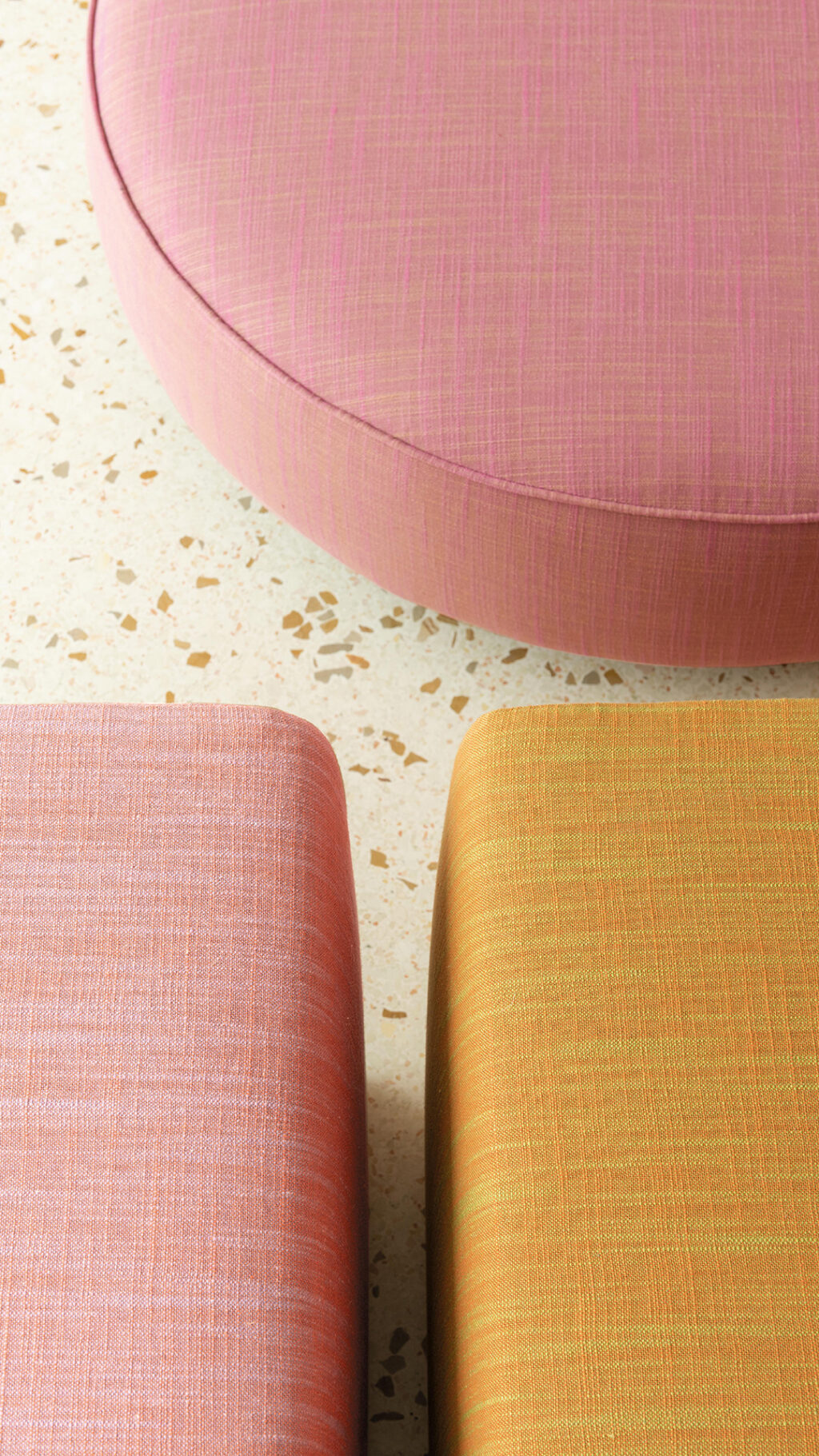
Defect by design
Slub Yarn: texture built In
Slub yarn is a type of yarn that’s uneven in thickness along its length. Those thicker and thinner sections are called slubs, and they’re what give fabrics a textured, irregular, more 'natural' look.
What does that do to a fabric?
When slub yarns are woven or knitted into fabric, they create:
- Organic texture – visible highs and lows in the surface
- Visual depth – light catches differently on thick vs thin parts
- Handcrafted feel – often described as relaxed or 'artisanal'
Core spinning principles: how slub yarns are made
There are a few different ways to create slubs during the yarn spinning process. Understanding Slub Yarn Production goes into it in depth, so we suggest you read that for a deeper dive.
Summary of key techniques
- Ring Spinning: The most popular industrial method, using computer-controlled servo motors to "jerk" the rollers and create thick/thin intervals.
- Hand Spinning: A spinner manually adjusts the tension and amount of fiber fed to create irregular lumps.
- Rotor Spinning: A modern, faster method that uses air pressure or varying feeder speeds to create thick spots.

What Is Slubbed Fabric?
Slubbed fabric is a woven or knitted fabric made with intentionally uneven, slubbed yarns, so its surface shows controlled, visible irregularities in thickness along the yarn path. To the eye, that can appear as fine ridges, soft nubs, or a subtle, irregular grain running across the cloth, rather than a perfectly flat, uniform texture. To the touch, it feels quietly textured and cosy without being scratchy or abrasive, which is important for high-use upholstery.
You’ll find slubbiness in linen, cotton, silk and many modern performance blends. Linen fibres are naturally a bit slubby and irregular, while engineered slub cottons and man-made fibre blends use precisely programmed slub yarns to exaggerate that effect in a repeatable, scalable way for commercial upholstery collections.
How slubbed fabrics typically behave
- Yarn thickness visibly varies across the surface, creating a thick–thin rhythm instead of a perfectly smooth plain weave.
- Tiny bumps or nubs are noticeable when you run your hand over it, adding tactile interest that still passes everyday comfort expectations.
- The overall mood is calm and casual rather than glossy and formal, which makes slubbed textures ideal for relaxed living spaces and hospitality environments.
- Light catches the texture unevenly, adding depth and shadow even in plain, solid colours, so the fabric reads richer on sofas, armchairs and headboards.
Research shows that slub yarns can reduce tensile strength and abrasion resistance. Mills carefully optimise those parameters and use compact spinning to keep the fabric robust under Martindale and Wyzenbeek testing.
At fabric level, higher slub frequency and thickness tend to increase pilling risk, which is why performance slub constructions pair strong fibres (like polyester-rich blends) with controlled slub geometry and appropriate twist to maintain good pilling grades.
Seam performance is managed through balanced constructions and stable base yarns, ensuring the thicker slub areas do not promote seam slippage, even on high‑load seating seams.
Why Slubby Upholstery Works So Well in Performance Fabrics
As performance fabric specialists, we look at slubbiness through the lens of how a fabric behaves in real homes and high‑traffic spaces, not just how it looks. Slubbed constructions can be engineered to balance everyday practicality with the relaxed, tactile aesthetic people love.
From a technical point of view, slubbiness supports performance in a few key ways:
- The subtle highs and lows in the weave help disguise light creasing and pressure marks.
- The textured surface can make small, everyday spills less visually obvious once they’re cleaned.
- Paired with a robust backing, the construction supports shape retention over time.
- Using abrasion‑resistant yarns helps the fabric withstand regular, high‑traffic use.
- Advanced stain‑resistant finishes make maintenance simpler while preserving the slubby look.
Together, these factors mean slubby performance upholstery can offer both everyday comfort and long‑term durability. This makes slubbed performance fabrics a strong choice for:
- Busy seating areas where appearance retention and cleanability matter.
- Family sofas and armchairs that need to feel inviting but stand up to daily use.
- Hospitality and contract settings where you want a more natural, textured look without compromising on technical performance.
In other words, slubbiness becomes more than a visual trend; it is a design tool that, when supported by the right engineering and testing, helps performance upholstery look better for longer in real‑world conditions.
Let’s wrap up
Understanding slub fabric helps you appreciate the artistry behind upholstery materials, from subtle texture variations to the way they transform a piece of furniture. We’re passionate about performance fabrics that combine durability with design. If you’d like to learn more about specialty weaves, textures, and practical care tips, explore our other guides on upholstery fabrics.
Slub, Slubby and Slubbiness: Quick Glossary
- “Slub”: A thicker section in a yarn or fibre, or the overall bumpy look created by these sections.
- “Slub yarn” / “slubby yarn”: Yarn engineered with varying thickness so slubs appear along its length.
- “Slubbed fabric” / “slubby fabric”: Fabric made from slub yarn, with a visibly irregular surface.
- “Slubbiness”: How strongly that texture shows; more slubbiness means more visible bumps and character.
 Design Inspiration
 Hospitality